
Origins to Icons - London's Luxury Hotel Scene
Discover how some of London’s most iconic and luxury properties came to find themselves at the pinnacle of hospitality and 5* service in the English capital
To understand the history of a luxury product gives the customer a profound insight into why the product is considered so high-end. The same is absolutely true of luxury hotels.
London, a city renowned for culture, experience and, most notably, history, is spoilt with an incredible wealth of luxury properties that can offer you great location, beautiful interiors, and service that will leave you satisfied.
Our collection of Host Hotel Partners , however, offer a rich tapestry of human stories that help showcase London as a destination that is uniquely poised for storytelling and delivering ultra luxury experiences that are infused with fascinating history, deeply felt culture, and of course an excellence of service that is rarely topped.
These 10 host hotels, all of which will be home to our elite line-up of luxury incentive and event planners from across the world throughout our MASTERS by inVOYAGE conference, have powerful stories that highlight how there is no single path to delivering ultra-lux experiences to guests.
Among them are a coffee house that grew into a five-star hotel of fashion-led elegance, a banking headquarters reborn with a distinctly French character, and a hotel standing where a future queen once called home. Discovering how these addresses became the hotels we know today offers fresh inspiration for bringing their stories into a London programme.
The Berkeley London
The coffee house that changed address
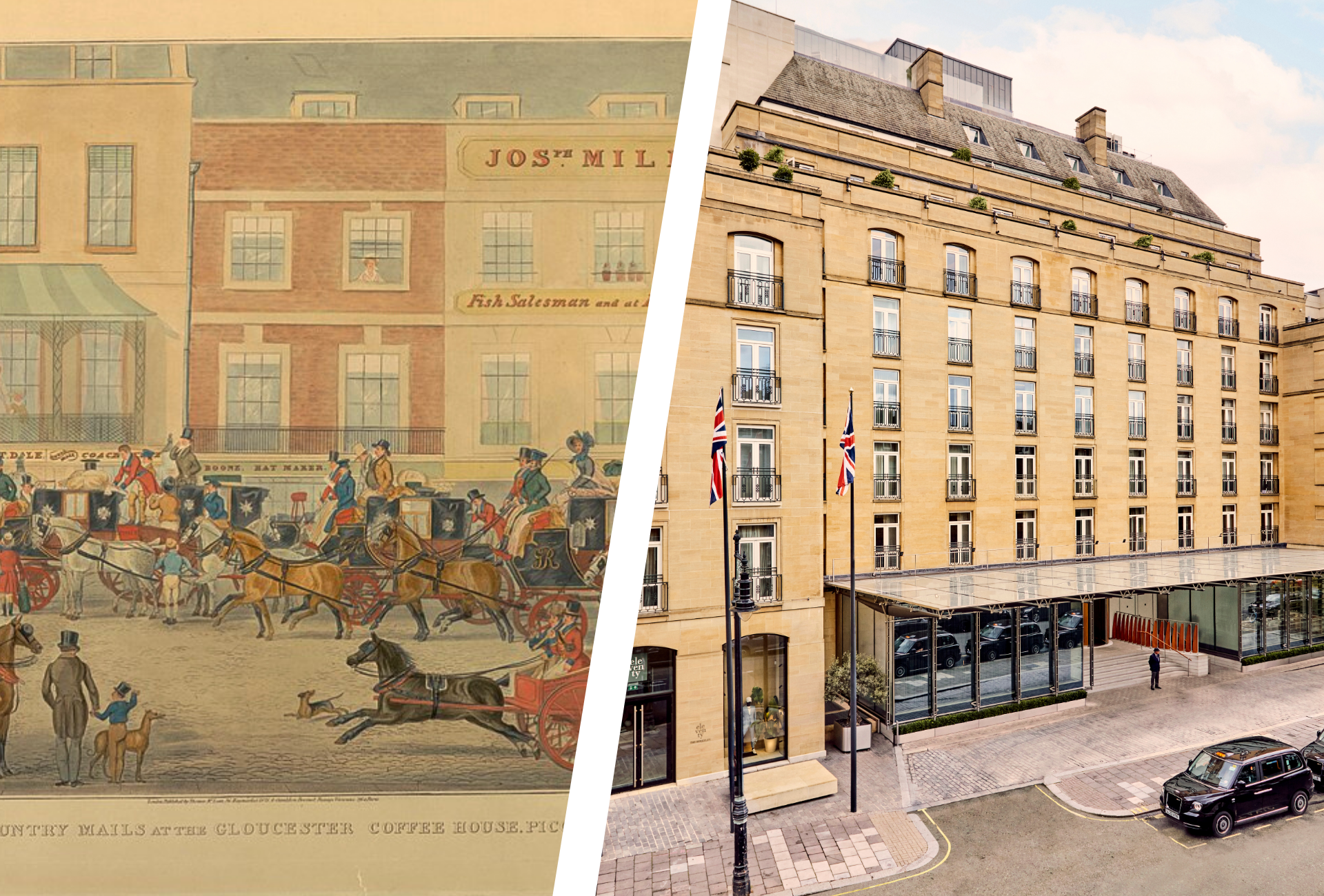
Mail coaches outside the Gloucester Coffee House on Piccadilly in 1828, an early chapter in The Berkeley’s story.
Credit: Charles Rosenberg, West Country Mails at the Gloucester Coffee House, Piccadilly, 1828. Cooper Hewitt, Smithsonian Design Museum, gift of Hamill and Barker, 1962-143-102. Via Wikimedia Commons. Public domain.
The Berkeley’s story begins at the corner of Berkeley Street and Piccadilly, where the Gloucester Coffee House served coachmen on the Western Mail route in the eighteenth century. Over time, the establishment developed into a hotel and a fashionable meeting place, with debutantes and their companions among its guests.
Its next reinvention involved an entirely new address. In 1972, The Berkeley moved to Wilton Place in Knightsbridge, into a building designed by Brian O’Rorke. Restored features from the original property, including fireplaces, made the journey too.
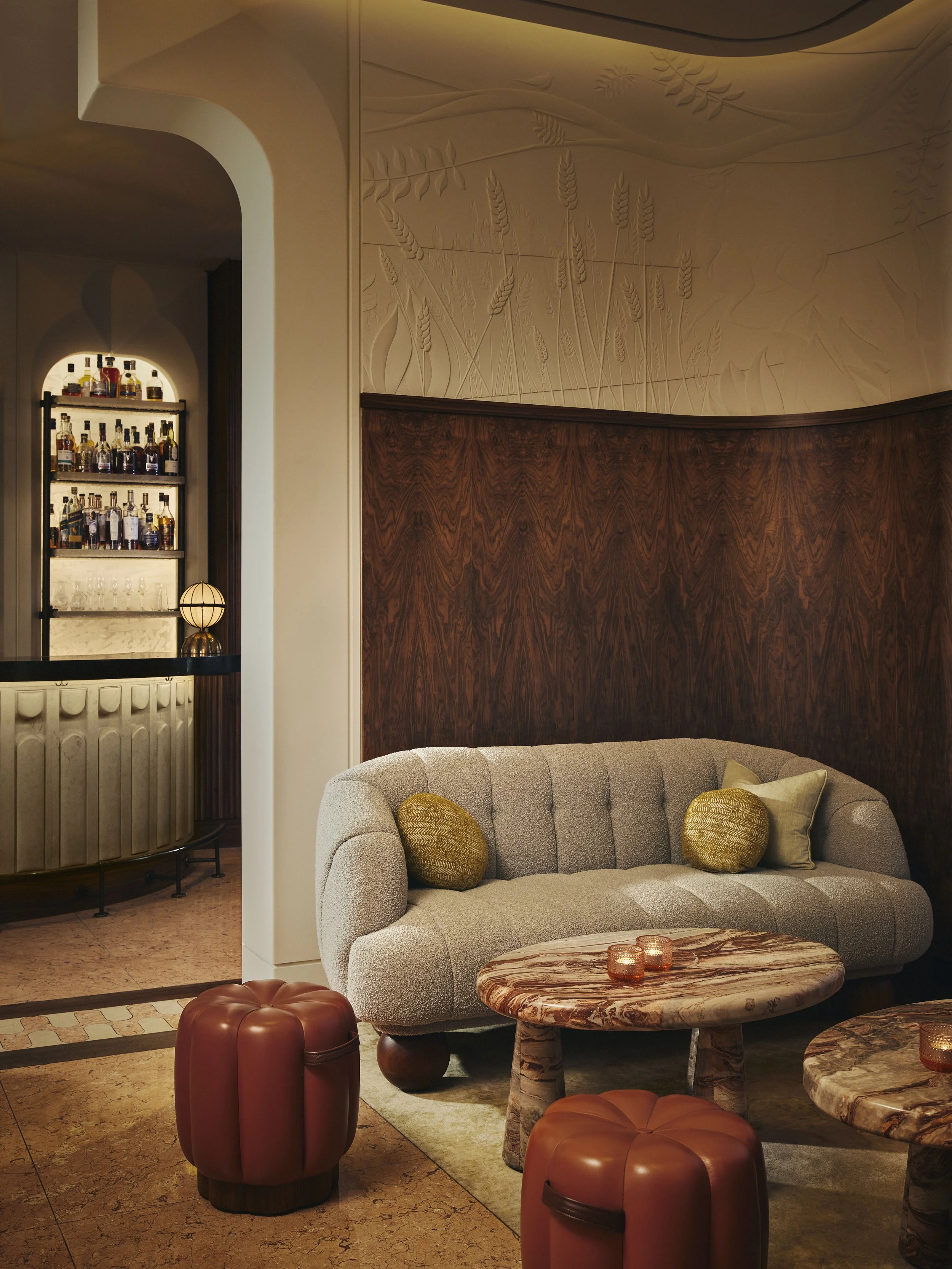
The appetite for change continued. David Collins’s Blue Bar, which opened in 2000, incorporated historic features by Sir Edwin Lutyens into a distinctive new setting, before closing in 2025. Today, Cédric Grolet’s pâtisserie supplies another reason to gather over coffee. The surroundings and clientele have changed considerably since the coachmen’s days, but the hotel’s willingness to find a new expression of itself has a long history.
-
Setting: Wilton Place, between Knightsbridge and Belgravia, with Hyde Park and the neighbourhood’s fashion boutiques nearby.
Accommodation: Designer rooms and suites include park-facing suites, private terrace categories and penthouses for guests needing more space.
Meetings and events: The 311 sq m Ballroom is published for 54–250 guests, depending on configuration, with a private entrance and adjoining Belgravia Room and terrace.
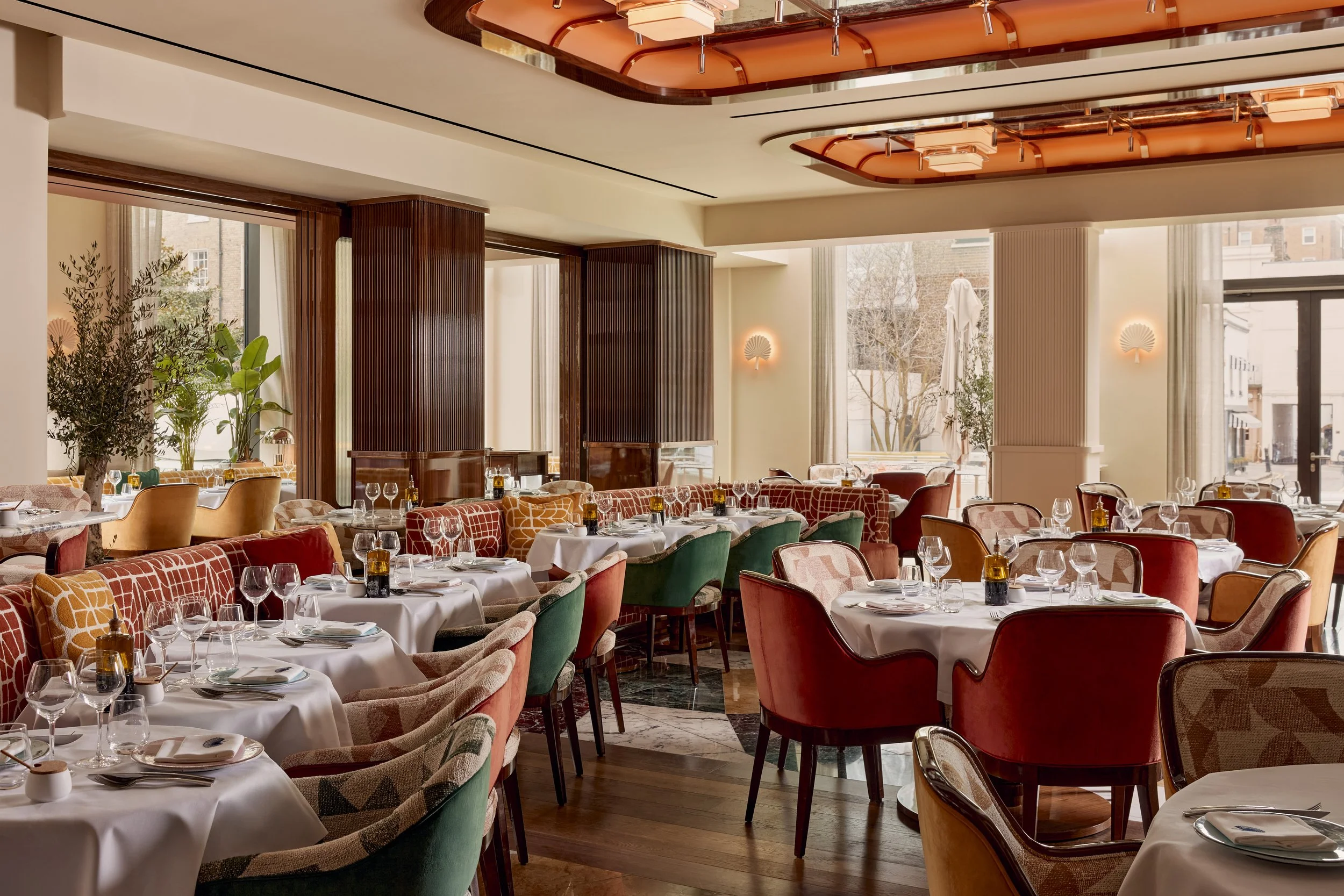
Dining: Cédric Grolet’s pâtisserie and La Môme London bring contrasting French influences; the events team offers bespoke menus for private gatherings.
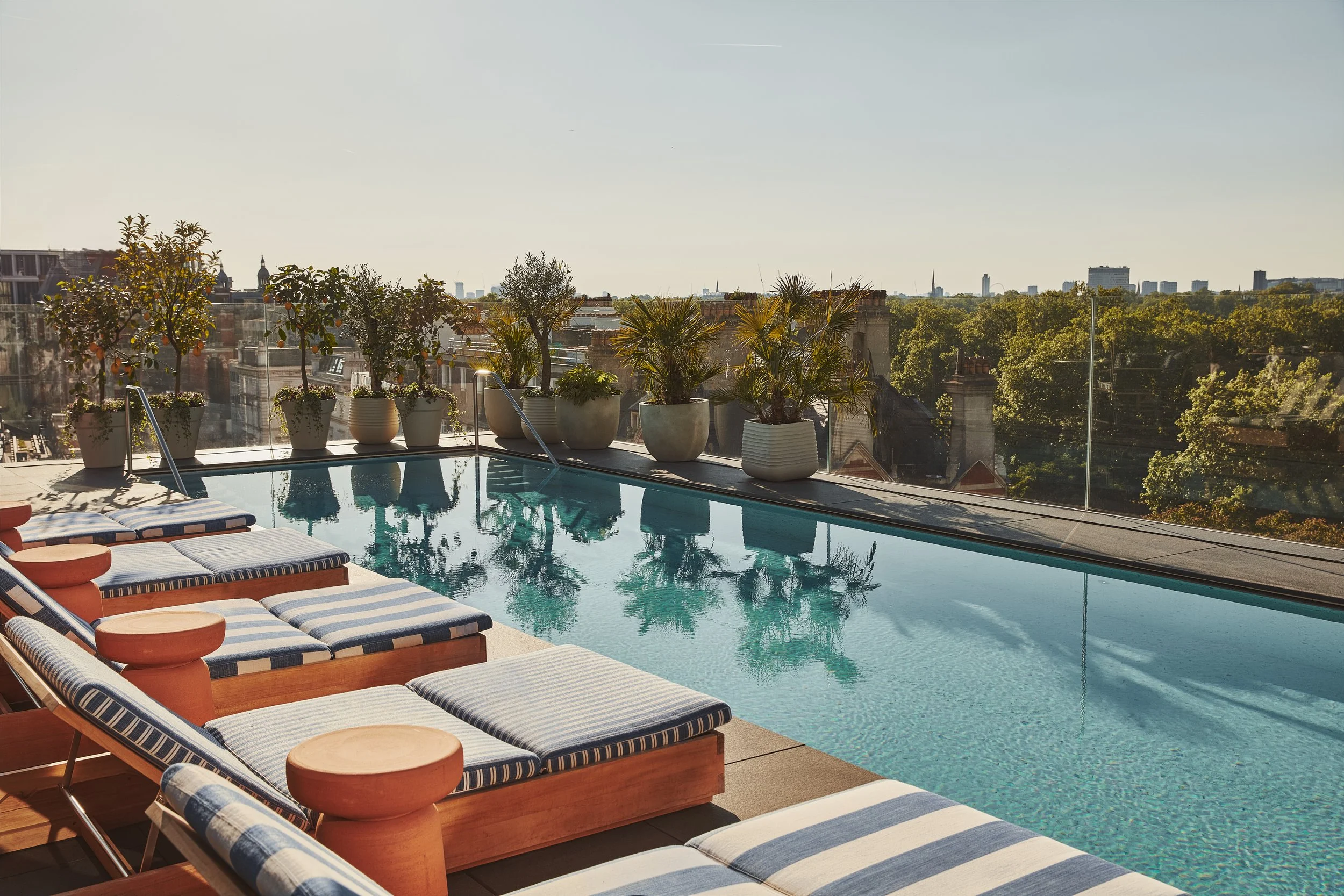
Wellness: Stays include access to Surrenne Belgravia, with a 22-metre pool, treatment rooms and fitness studios; the hotel also has its rooftop pool.
Experiences: The hotel explicitly offers rooftop pool parties for groups, linking a summer gathering to the pool introduced with its 1972 move.
Incentive potential: A fashion and design programme through Knightsbridge, with pâtisserie as a welcome touch and a rooftop gathering as the finale.
The hotel’s own group offering includes rooftop pool parties, giving a summer programme a direct connection to the pool introduced with its 1972 move (although at that time, the pool was located on the 7th floor). A gathering above Knightsbridge could continue into an exploration of the neighbourhood’s fashion and design, extending the hotel’s history of reinvention into the wider London experience.
The Savoy
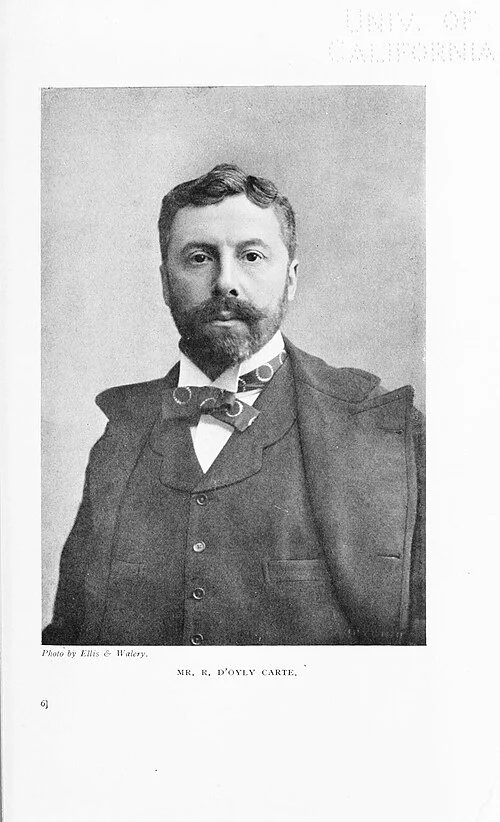
Richard D’Oyly Carte, the theatre impresario behind The Savoy.
Credit: Ellis & Walery / Wikimedia Commons. Public domain.
A hotel with a showman behind it
Richard D’Oyly Carte understood how to put on a show. The impresario behind the Savoy Theatre and the Gilbert and Sullivan operas also recognised an opportunity in hospitality, inspired by the comforts he had encountered in American hotels.
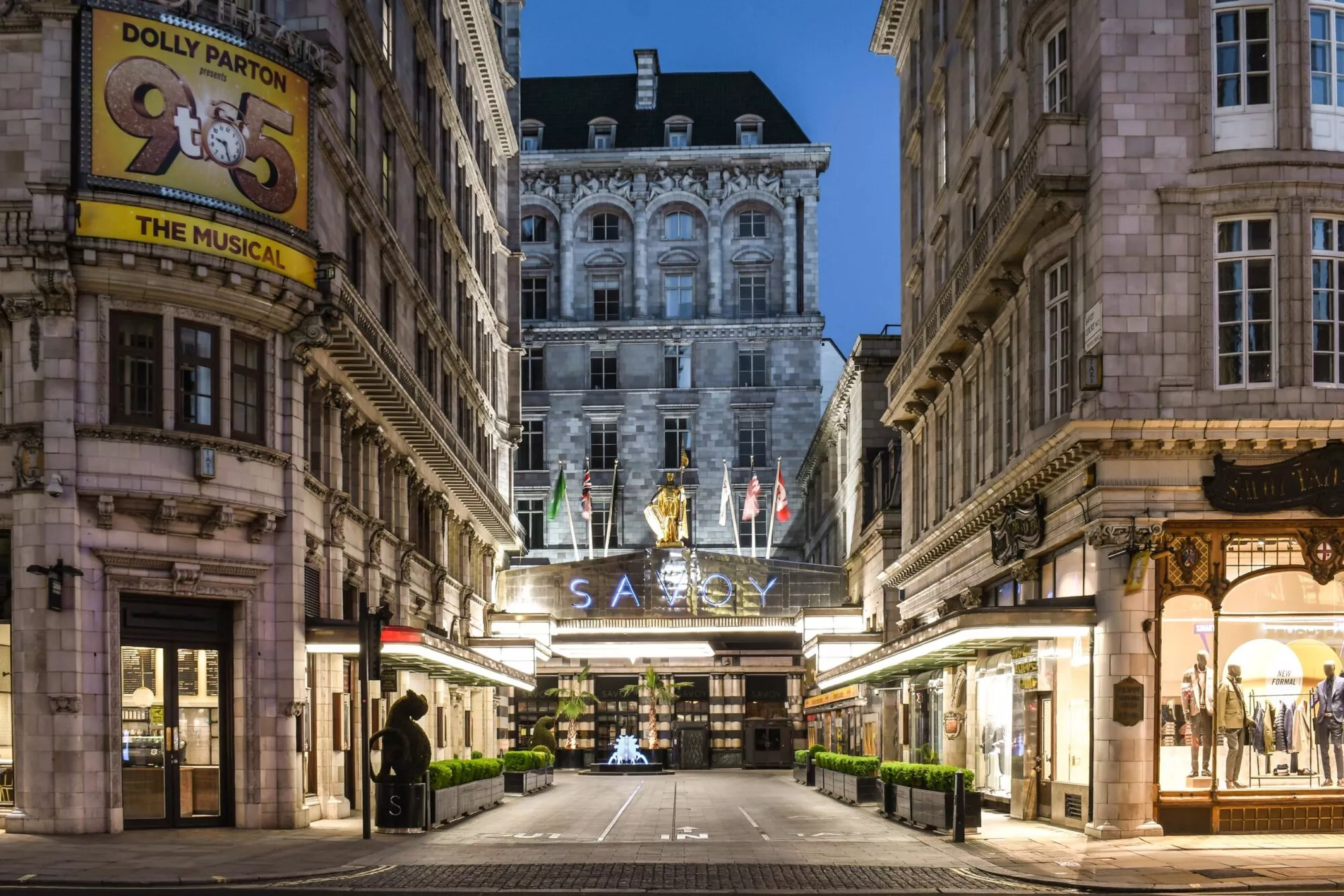
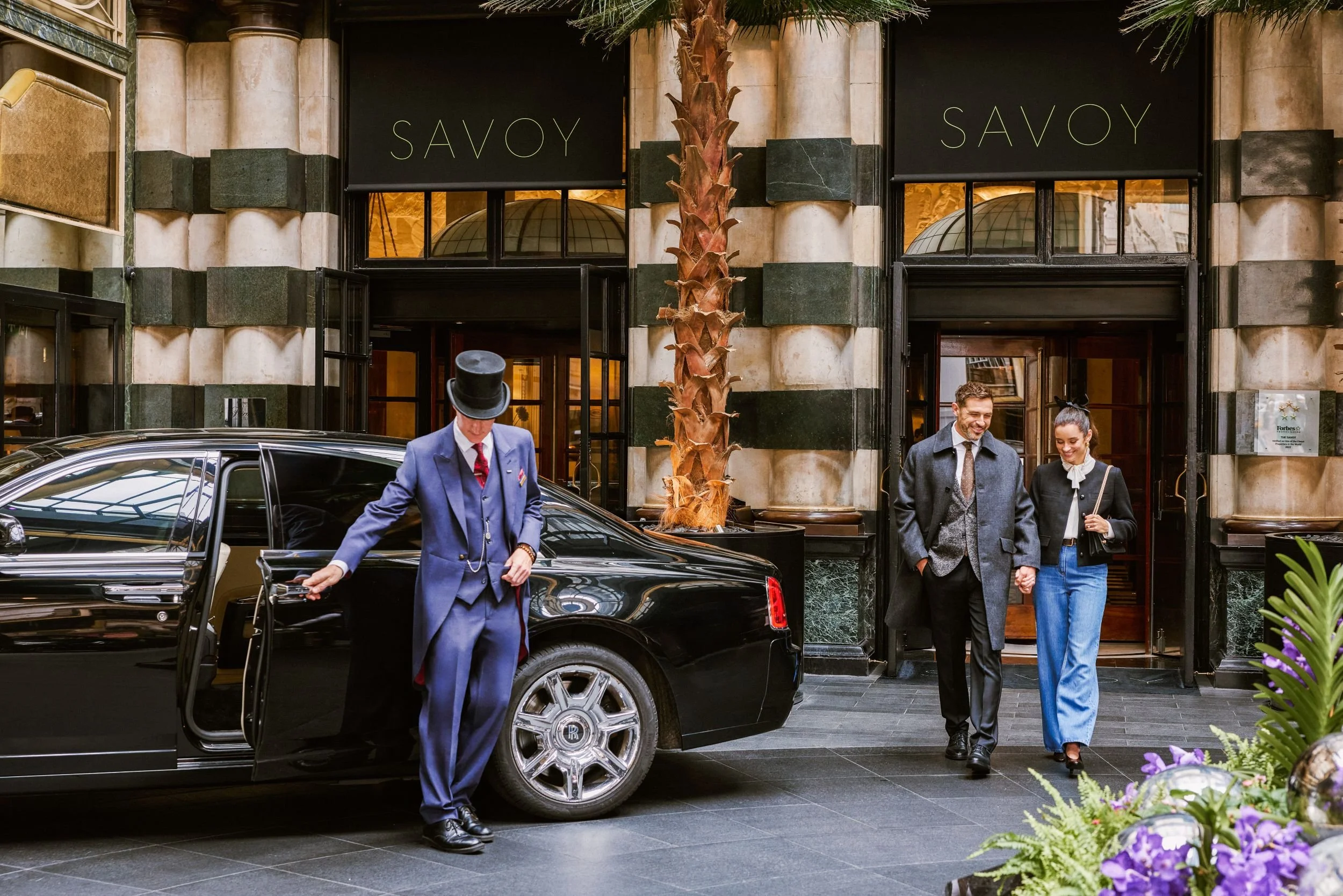
When The Savoy opened beside his theatre in 1889, its innovations were part of the attraction. Electric lighting and lifts – plus hot and cold running water - brought new expectations of convenience to a London stay. Historic England records an unusually generous provision of seventy bathrooms in the original hotel.
César Ritz and Auguste Escoffier subsequently helped shape its reputation for service and cuisine. Together with D’Oyly Carte’s theatrical ambition, their influence made the hotel a place where dining and staying could become an occasion in themselves.
That connection with performance remains a useful way to understand The Savoy. A London incentive that brings together dinner, a hotel stay and an evening at the theatre is following an idea built into this address more than a century ago.
-
Setting: The Strand, beside the Savoy Theatre, with the Thames, Covent Garden and West End within reach.
Accommodation: 263 rooms and suites, with Edwardian and Art Deco interiors and river-view categories; the hotel advertises group rates from eight rooms.
Meetings and events: The Lancaster Ballroom’s configuration chart lists 400 theatre-style or 700 for a reception; it has its own stage and adjoining Parlour Room.
Dining: Savoy Grill and Restaurant 1890 sit alongside private event rooms including Pinafore, an original room associated with Churchill’s dining circle.
Wellness: A naturally lit atrium pool, sauna, steam room, treatment rooms and 24-hour gym offer time to recover between events.
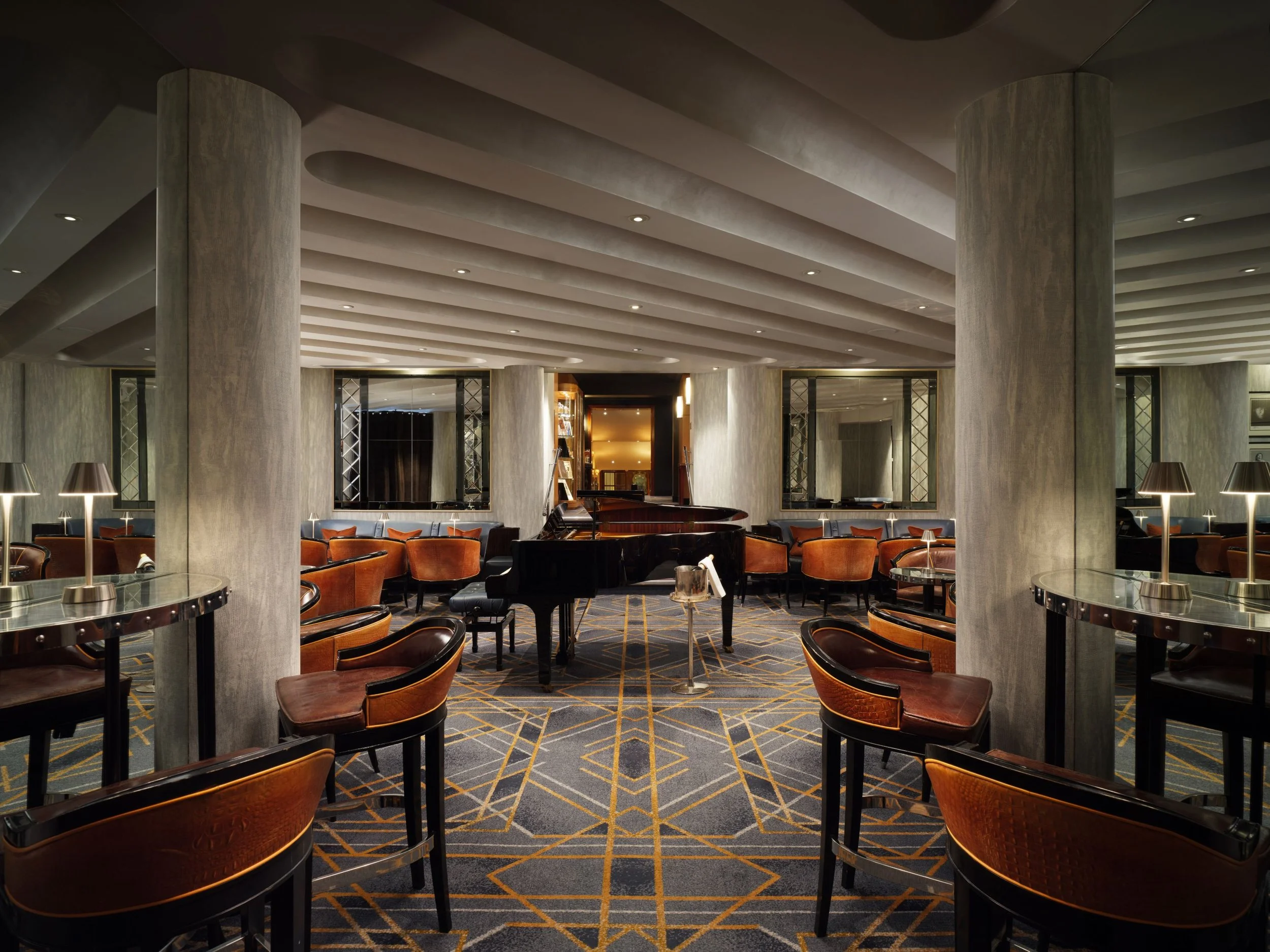
Experiences: The hotel advertises a tour with its archivist followed by Champagne in the American Bar; discuss the group format when enquiring.
Incentive potential: Let the founder’s theatrical story connect an archivist-led introduction, a private dinner and a West End performance.
The Savoy offers a particularly direct way to bring its past into a stay: a guided tour with the hotel’s archivist, followed by Champagne in the American Bar. For a group, this tour could serve as an opening chapter before dinner and a West End performance, connecting the people and innovations behind the hotel with the theatrical London that inspired its founder.
Mandarin Oriental Hyde Park
From bachelors’ club to Knightsbridge’s grande dame
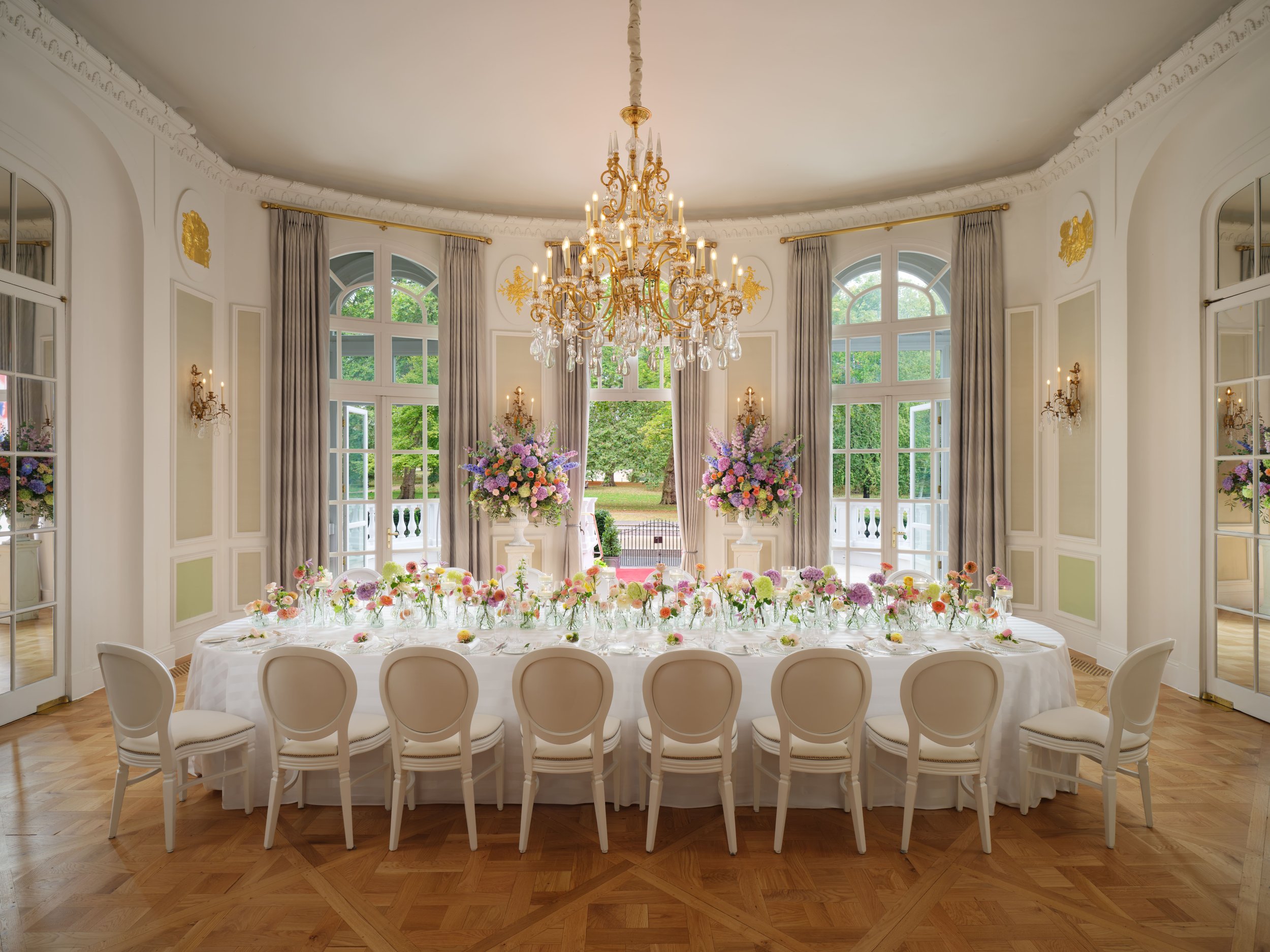
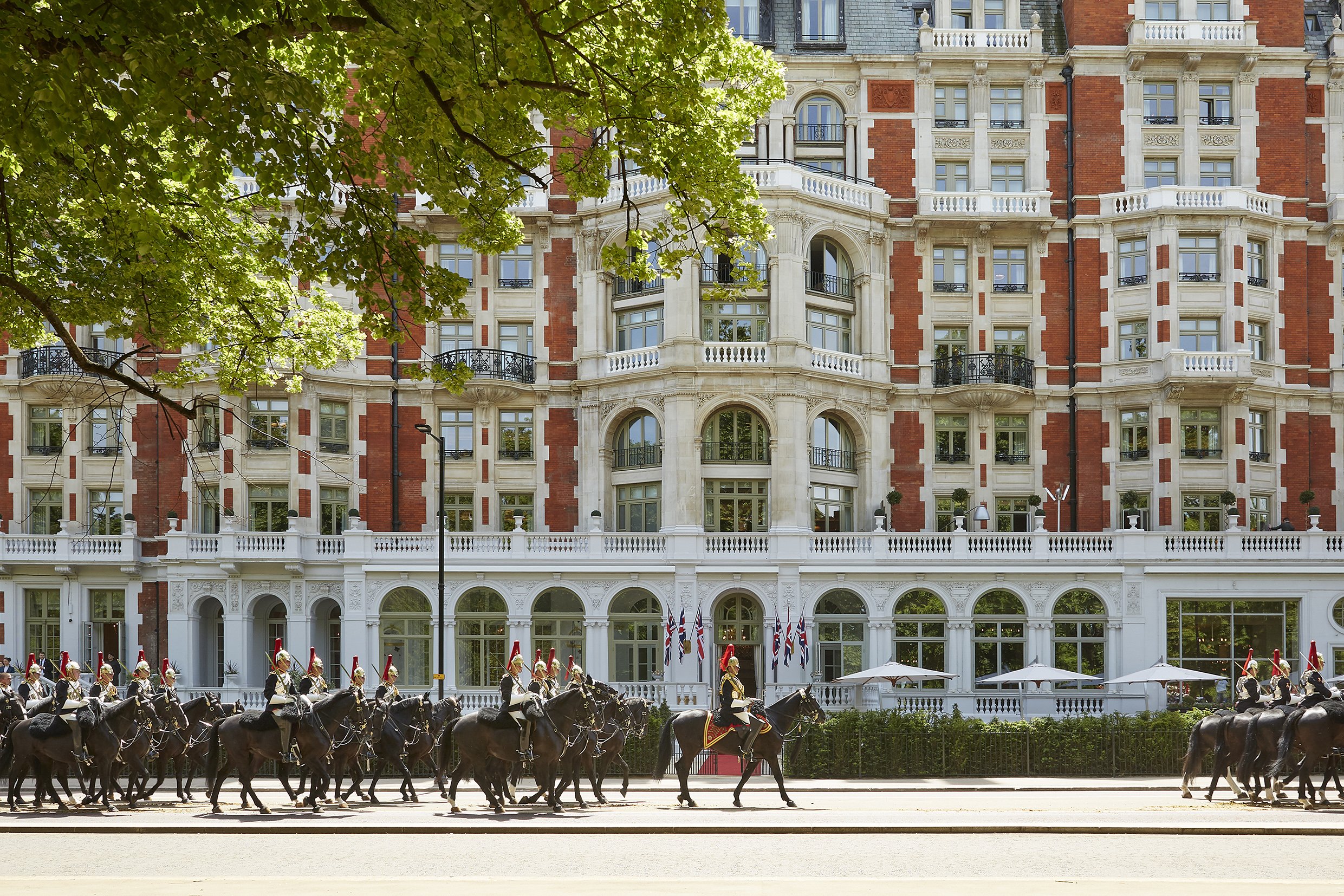
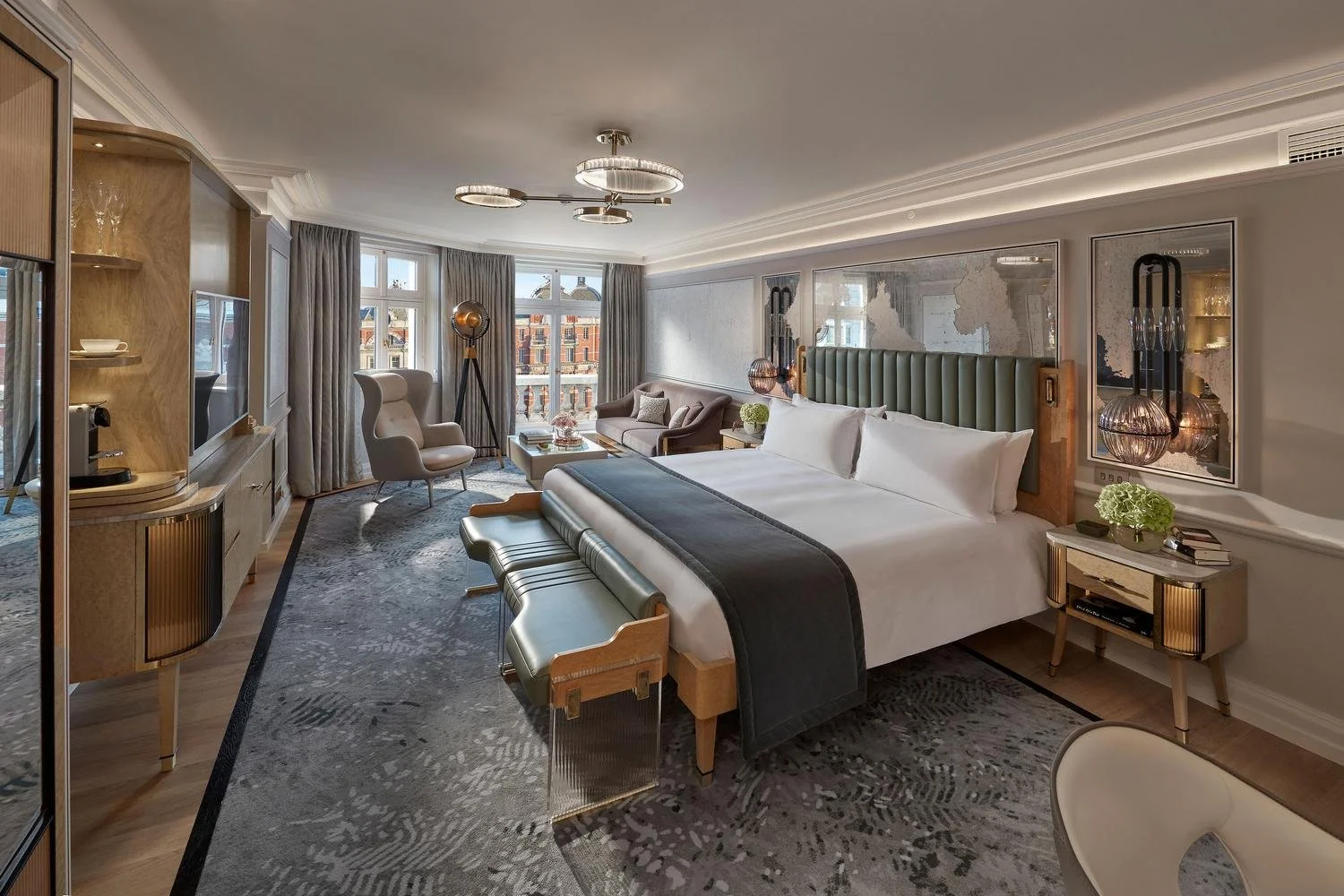
The building now known as Mandarin Oriental Hyde Park began life in 1889 as Hyde Park Court and Club, offering an exclusive residential setting for affluent bachelors. Its first occupants came to live in private apartments with club facilities, before the address took on a wider hospitality role.
A fire damaged the upper floors in 1899. Following restoration and conversion, the building reopened as the Hyde Park Hotel in 1902, with a private Royal Entrance from the park that remains part of its identity.
Mandarin Oriental acquired the hotel in 1996, reopening it after refurbishment in 2000. Later, designer Joyce Wang drew on its royal heritage, parkside setting and the glamour of early twentieth-century travel to reimagine the interiors.
Across these different chapters, the relationship with Hyde Park has remained especially important. The Royal Entrance, the views and the references to nature indoors give gatherings here a connection to the landscape that helped define the building from its earliest years.
-
Setting: Between Knightsbridge and Hyde Park, with shopping on one side and parkland on the other.
Accommodation: 181 rooms and suites, comprising 141 rooms and 40 suites, with views towards Knightsbridge, Hyde Park or the courtyard.
Meetings and events: The Ballroom accommodates up to 240 for lunch or dinner, 250 theatre-style or 400 for a reception; The Loggia offers a smaller setting with garden access.
Dining: Dinner by Heston Blumenthal explores historic British cuisine; The Rosebery serves afternoon tea, while The Aubrey adds a Japanese izakaya experience.
Wellness: The spa and fitness facilities include a 17-metre pool; Mindful Meetings incorporates nourishing food and wellbeing breaks into an agenda.
Experiences: The Royal Entrance and restored Ballroom connect events directly to the building’s royal associations; terrace hire is seasonal.
Incentive potential: Pair an independently guided park walk with a garden reception, then carry the historical theme through dinner inspired by British culinary traditions.
The Loggia’s connection to the garden through the Royal Entrance gives an event a tangible link to the hotel’s royal history. Drinks here, or a reception in the restored Ballroom, could follow a guided walk through Hyde Park. The route brings the park into the programme before guests encounter the views and natural references that shaped the interiors.
InterContinental London Park Lane
Royal heritage. Iconic address. A legacy of luxury.

InterContinental London Park Lane stands proudly today on the very site of 145 Piccadilly, Queen Elizabeth II’s former childhood residence. Queen Elizabeth II spent part of her childhood in the terraced house, with nursery rooms on its upper floor and windows overlooking the park. The hotel’s account recalls walks with her nanny through Mayfair and Hyde Park.
145 Piccadilly was lost during the Blitz. Decades later, architect Sir Frederick Gibberd designed a landmark luxury hotel, InterContinental London Park Lane, which opened its doors on 23 September 1975, ushering in a new chapter of elegance and distinction at one of London’s most coveted addresses. Situated at one of London’s most prestigious addresses, InterContinental London Park Lane embodies the epitome of refined luxury and timeless elegance. Overlooking the iconic Royal Parks and set in the heart of Mayfair, the hotel seamlessly blends classic heritage with contemporary sophistication.
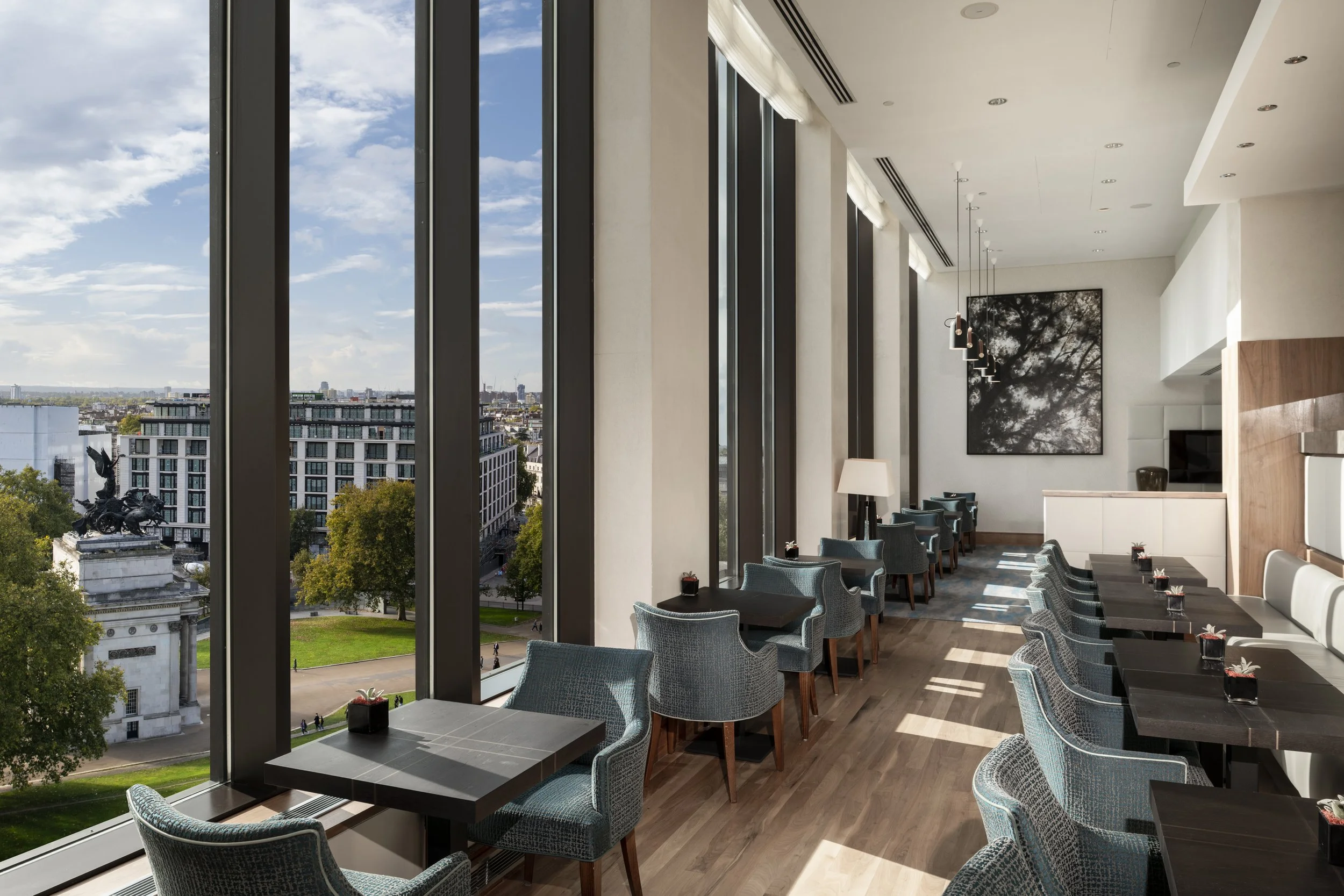

-
Setting: One Hamilton Place, at the meeting of Park Lane and Piccadilly, beside Hyde Park and Green Park.
Accommodation: 449 rooms, including 75 suites; the Mayfair Collection and signature suites offer options for VIP stays.
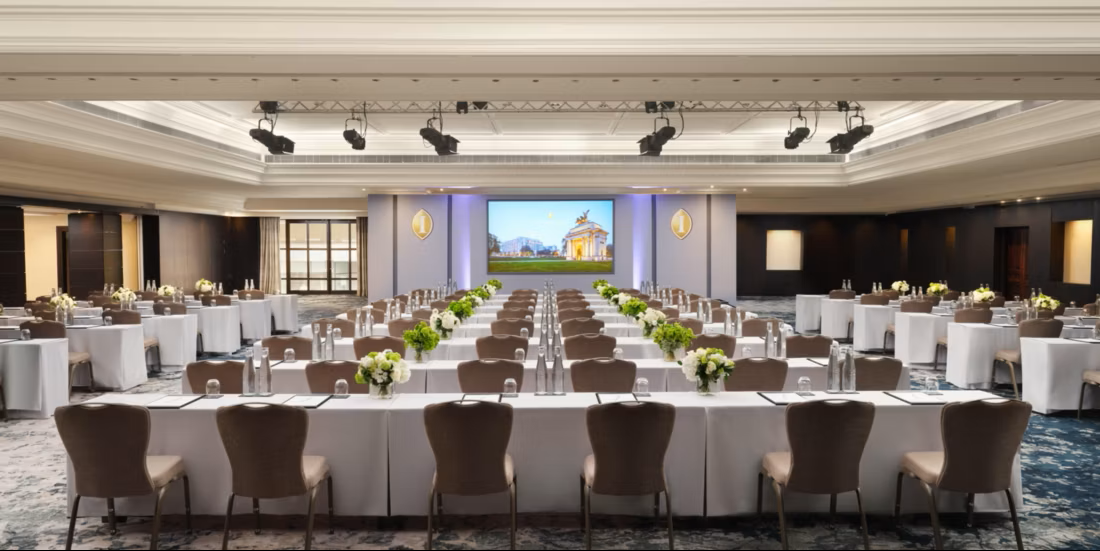
Meetings and events: A dedicated conference floor; the Ballroom accommodates up to 700 theatre-style, 750 for a banquet or 1,000 for a reception.
Dining: Theo Randall Cucina Italiana offers private dining for up to 24, alongside semi-private and full restaurant hire options.
Wellness: Spa InterContinental offers aromatherapy treatments; a fitness centre supports downtime between programme elements.
Experiences: The Wellington Lounge’s afternoon tea references Queen Elizabeth II through millinery-inspired pastries.
Incentive potential: Combine a substantial residential conference with a smaller royal-history programme through Mayfair and the parks, finishing with afternoon tea.
For guests staying here, the past offers a more intimate way to discover a familiar part of the capital. The site once connected to the private world of the Royal Family, this distinguished address will welcome the shared conference programme of MASTERS by inVOYAGE this November, bringing a remarkable sense of place to the occasion.
At the Wellington Lounge, the art of afternoon tea is steeped in royal heritage with exquisite, millinery-inspired pâtisserie honouring Queen Elizabeth II. Guests may opt for a guided walk through Mayfair and the Royal Parks, the experience offers a rare glimpse into the landscapes of her childhood and the enduring elegance of royal London. It gives a group a relaxed way to discover the history surrounding the conference address.
Hotel Café Royal
A fresh start on Regent Street
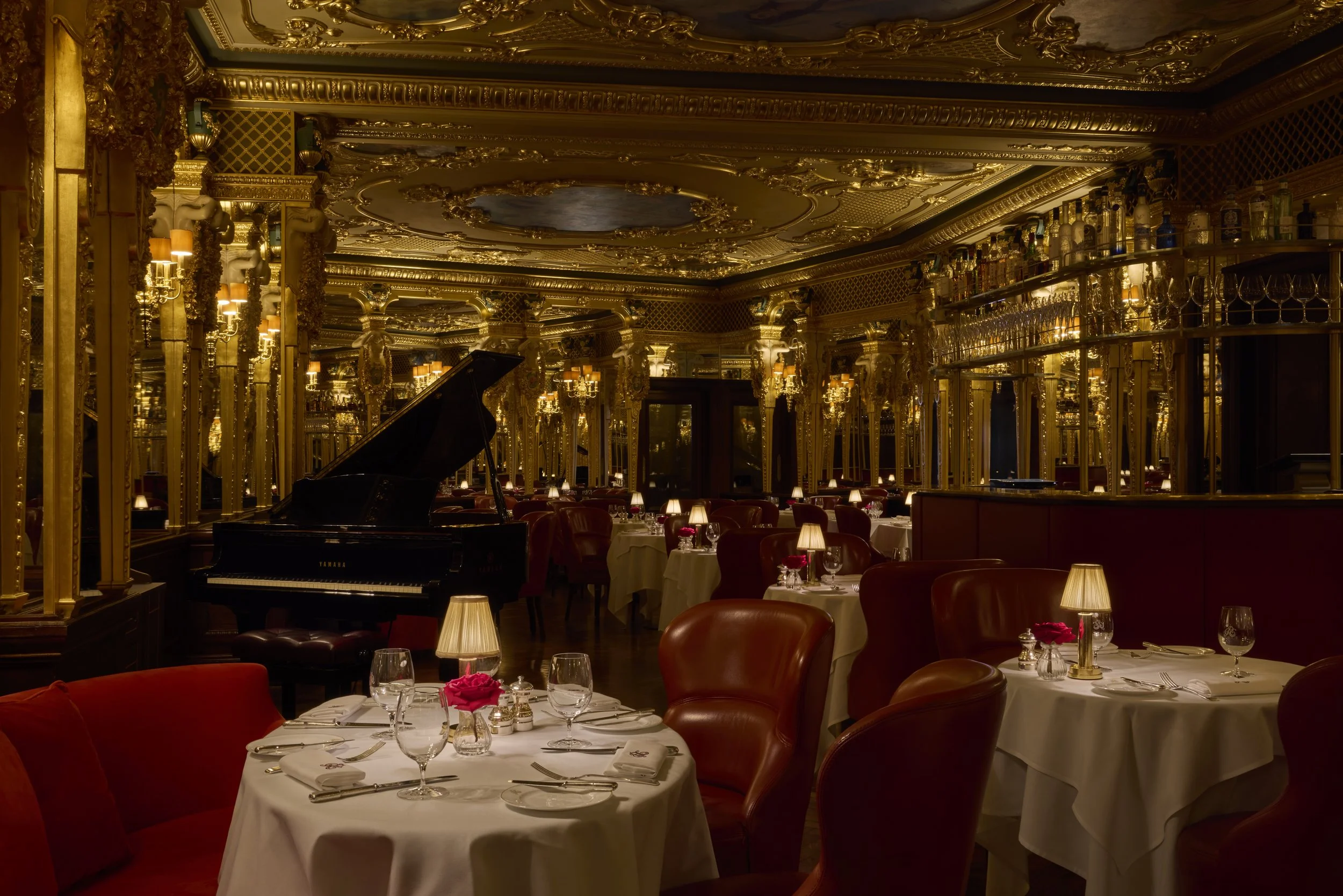
In 1863, French wine merchant Daniel Nicolas Thévenon and his wife Célestine arrived in Britain with creditors behind them. He changed his name to Daniel Nicols, and the couple established a café-restaurant that would grow into one of London’s celebrated meeting places.
-
Setting: Regent Street, where Mayfair, Soho and St James’s meet, with the West End close by.
Accommodation: 159 rooms and suites, including seven signature suites, combining contemporary interiors with the hotel’s historic public rooms.
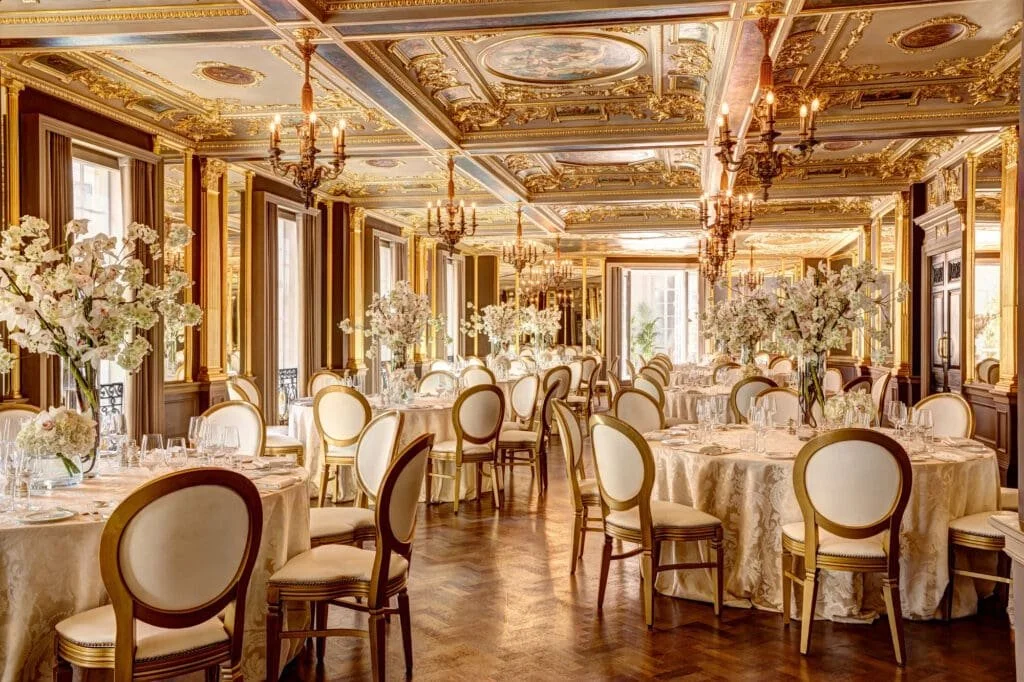
Meetings and events: The Pompadour Ballroom accommodates up to 110 for banqueting, 158 theatre-style or 250 for a reception; its terrace overlooks Regent Street.
Dining: Options include, Café Royal Grill, a Grade II-listed landmark on Regent Street, Alex Dilling, a two-Michelin starred restaurant, Cakes & Bubbles by Albert Adrià, and private gatherings in the restored Domino Room.
Wellness: Akasha Spa includes an 18-metre lap pool, hammam, watsu pool, sauna and steam room.
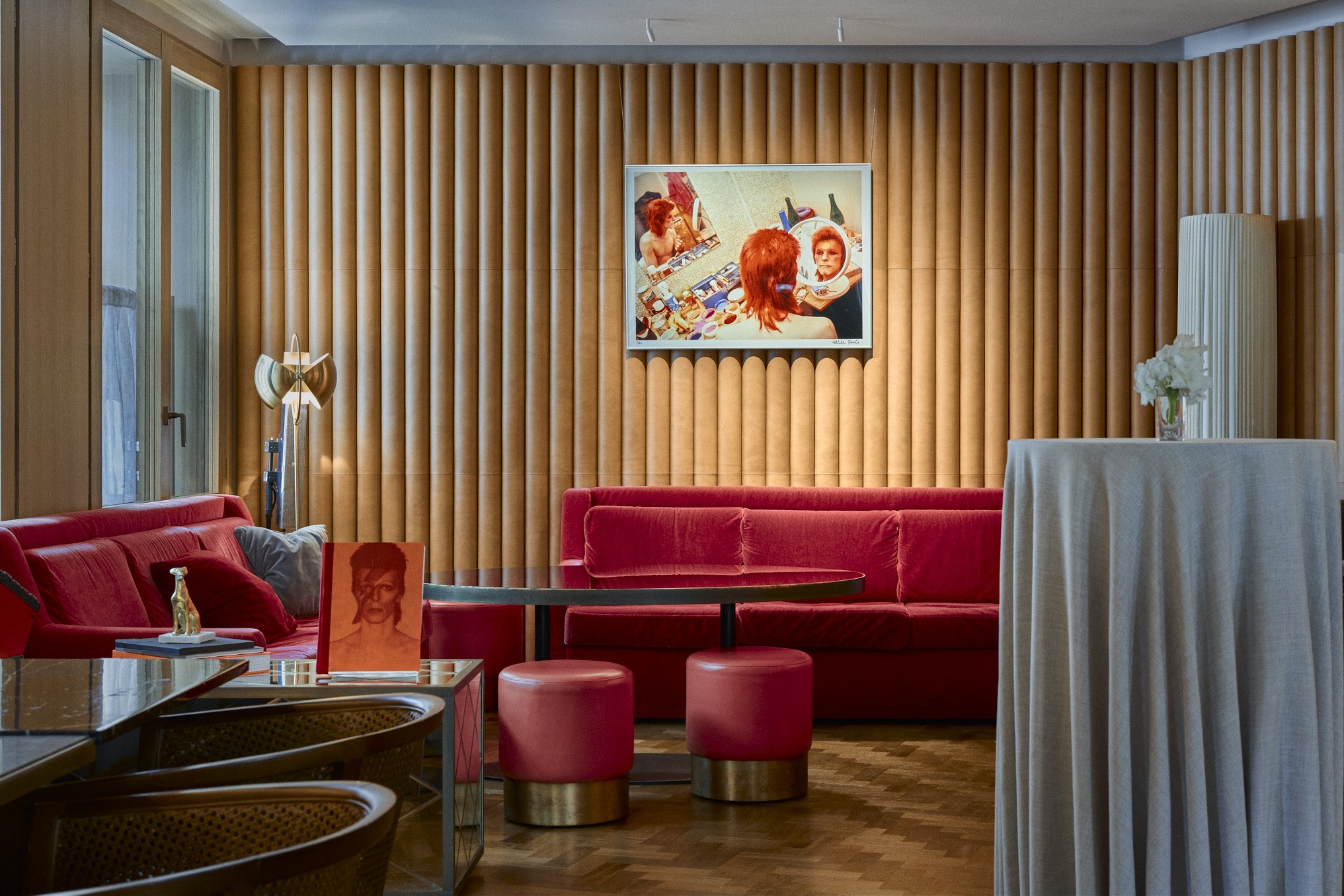
Experiences: Ziggy’s, a Bowie-inspired event space for up to 40, connects a private gathering with the hotel’s music history.
Incentive potential: Build a Soho music itinerary around Ziggy’s, or follow a day of West End discoveries with dinner in one of the restored historic rooms.
William Orpen’s 1912 painting captures the Café Royal’s life long before it became a hotel.
Credit: William Orpen, The Café Royal, London, 1912, Musée d’Orsay. Photograph: Sailko / Wikimedia Commons / CC BY 3.0.
Café Royal opened in 1865. Inspired by the brasseries of Paris, it expanded from Glasshouse Street into premises on Regent Street, attracting a clientele that would include Oscar Wilde, Winston Churchill, Muhammad Ali, Princess Diana, and Mick Jagger. Conversation, dining and the people around the table became central to its reputation.
The bedrooms came much later. In 2012, Café Royal became Hotel Café Royal following a transformation led by David Chipperfield Architects, working with conservation specialists Donald Insall Associates. Historic rooms were restored alongside new spaces designed with a quieter, contemporary character. The hotel balances the restraint of its modern interiors and the gilts, mirrors and painted ceilings of rooms made for extravagant occasions.
The founders’ story can be brought to life through a meeting in the Nicols, while the restored Pompadour Ballroom carries the café’s social heritage into a larger celebration. Ziggy’s offers a connection to another chapter: David Bowie’s farewell party at Café Royal in 1973. A gathering there could be paired with a guided exploration of Soho’s music history.
Sofitel London St James
French flair behind the banker’s façade
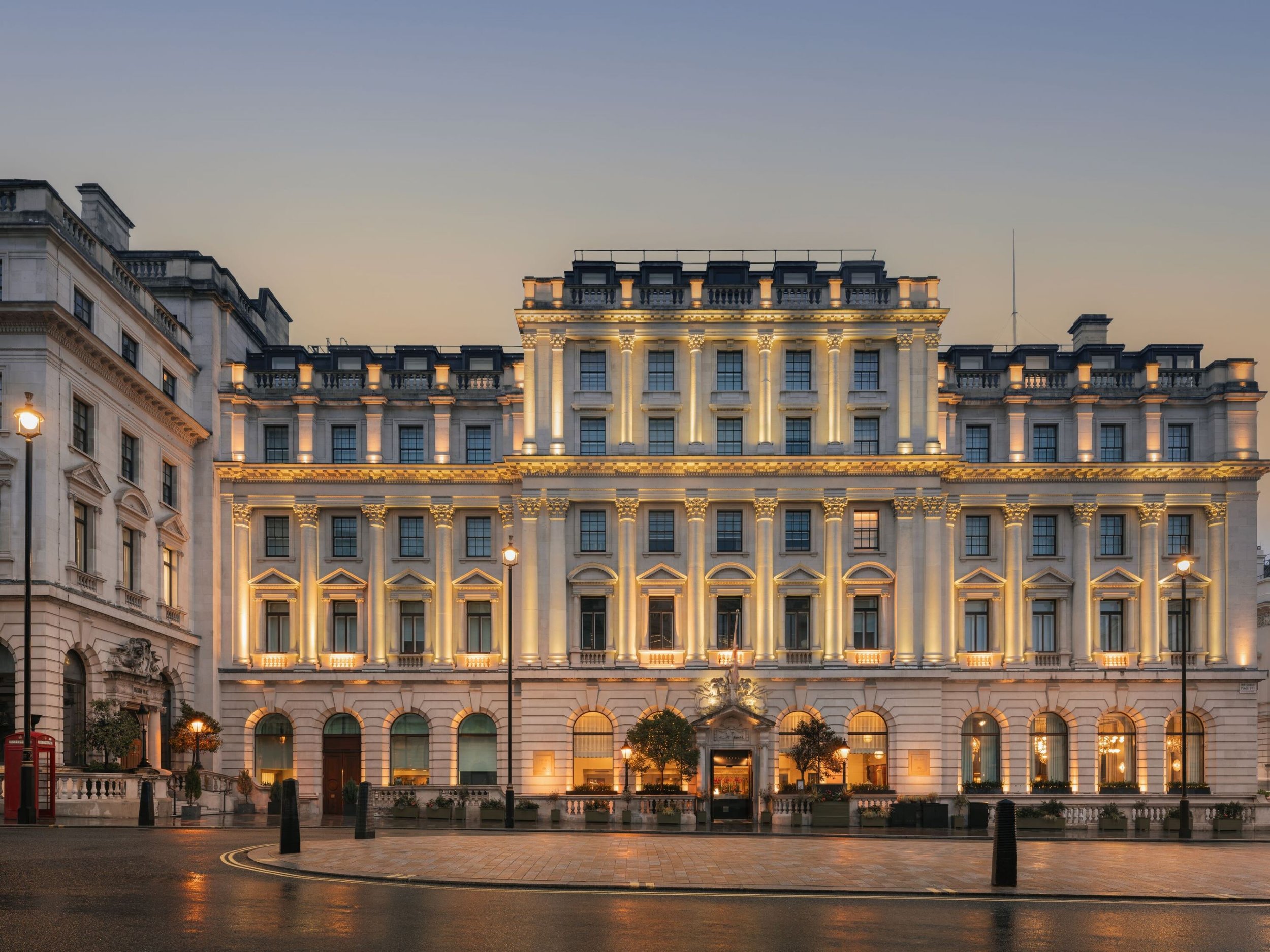
The assured neoclassical façade of Sofitel London St James once belonged to a banking headquarters. Completed in 1923, the building was designed by E. Keynes Purchase with Durward Brown for Cox and Company, an army banking agency. Cox and Kings and, later, Lloyds Bank continued its financial life.
In 2002, the Grade II-listed building became a luxury hotel. Original architectural features remained, giving Sofitel an imposing British setting in which to introduce its French approach to hospitality.
That relationship continues through the work of Pierre-Yves Rochon. His latest signature suites draw on London’s creative energy in the 1970s, interpreted through a Parisian perspective. It is a more playful chapter in a building whose first purpose was distinctly business.
The appeal lies in seeing those layers together: the solidity of the old banking address, the character of St James’s and the French influence guests encounter within.
-
Setting: Waterloo Place in St James’s, within the Grade II-listed former banking headquarters, close to Pall Mall and the West End.
Accommodation: 183 rooms and suites, with contemporary interiors that combine British references with the hotel’s French identity.
Meetings and events: The divisible Mayfair Suite accommodates up to 130 for a banquet, 170 theatre-style or 180 for cocktails, with an adjoining foyer.
Dining: Wild Honey St James and Bistrot at Wild Honey offer restaurant options; a private dining room accommodates up to 16 guests.
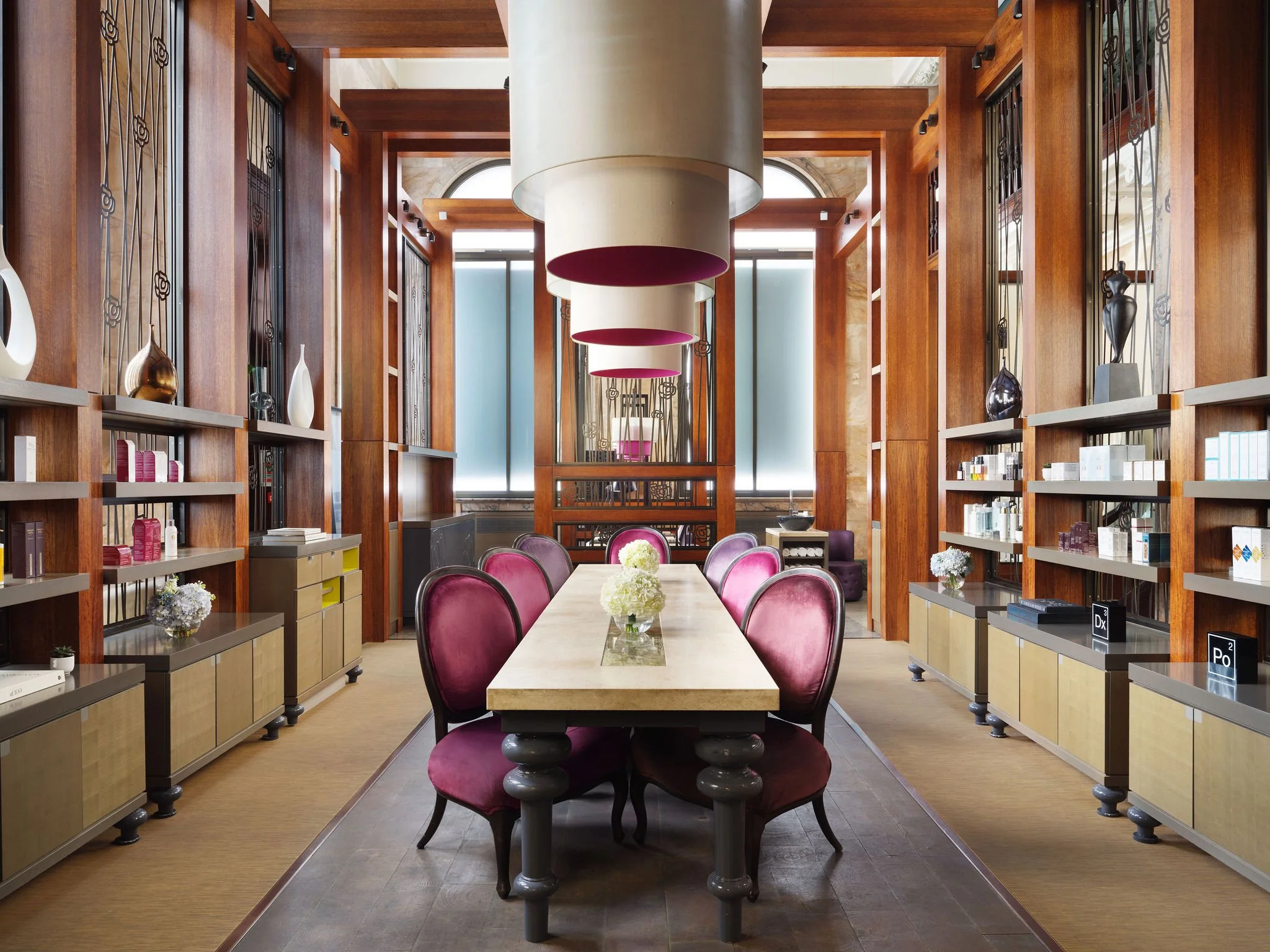
Wellness: Sofitel SPA stands where the former bank vaults once occupied, with original sculpted ceilings and offers a curated collection of treatments, led by renowned spa practitioner, Su-Man.
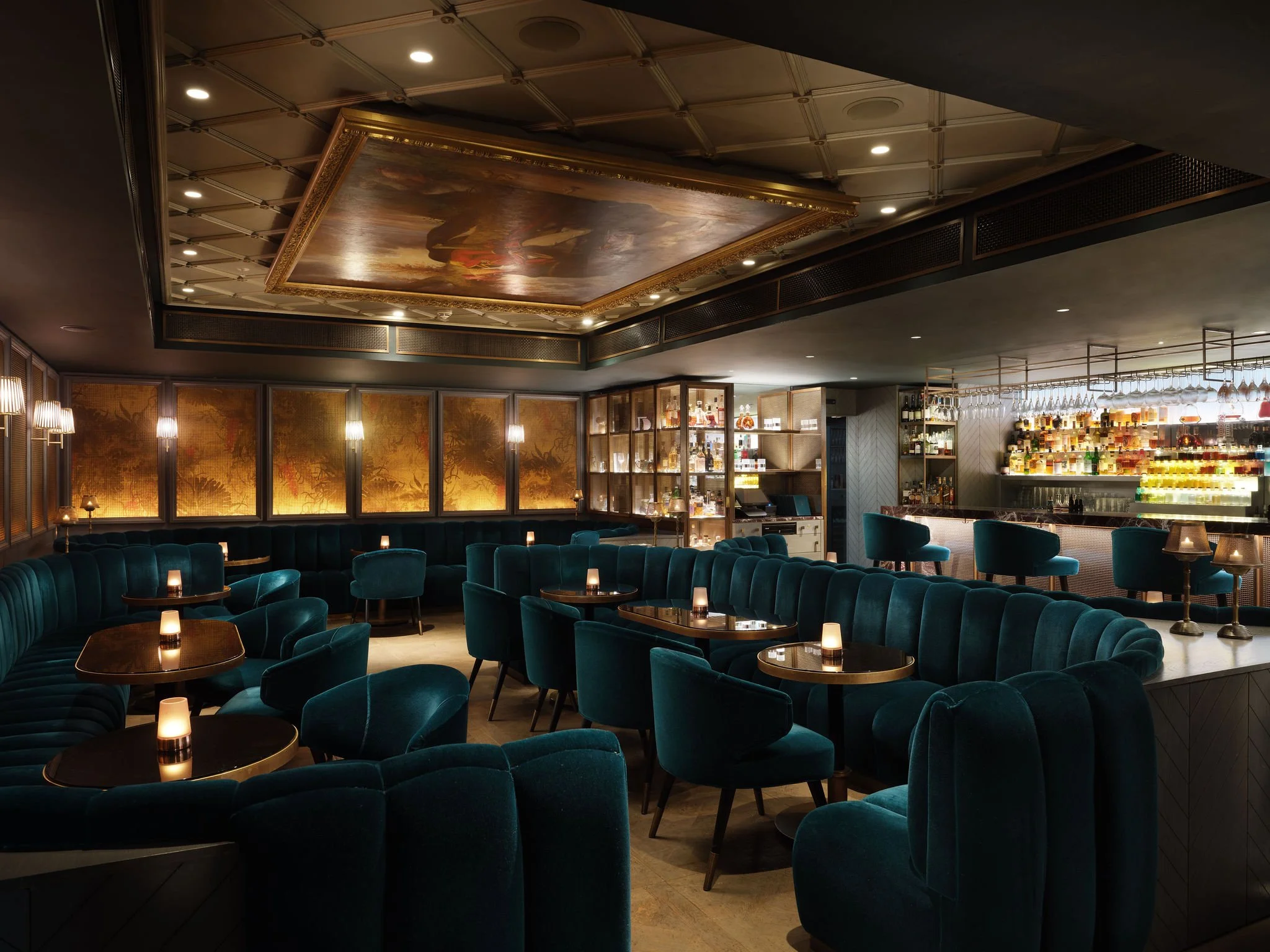
Experiences: St James Bar offers private gatherings with custom drinks menus and tailored themes, providing a setting for the building’s banking story.
Incentive potential: A St James’s architecture or gallery programme can finish with a private cocktail reception and a dinner bringing together British produce and French cooking.
St James Bar offers a setting in which to introduce the building’s banking past over cocktails. The hotel explicitly connects the bar to its former Cox and Company identity and offers private gatherings with custom drinks menus and tailored themes. A guided architectural walk through St James’s could extend that conversation into the surrounding neighbourhood before guests return for the reception.
The Dorchester
A grand hotel built for a new era
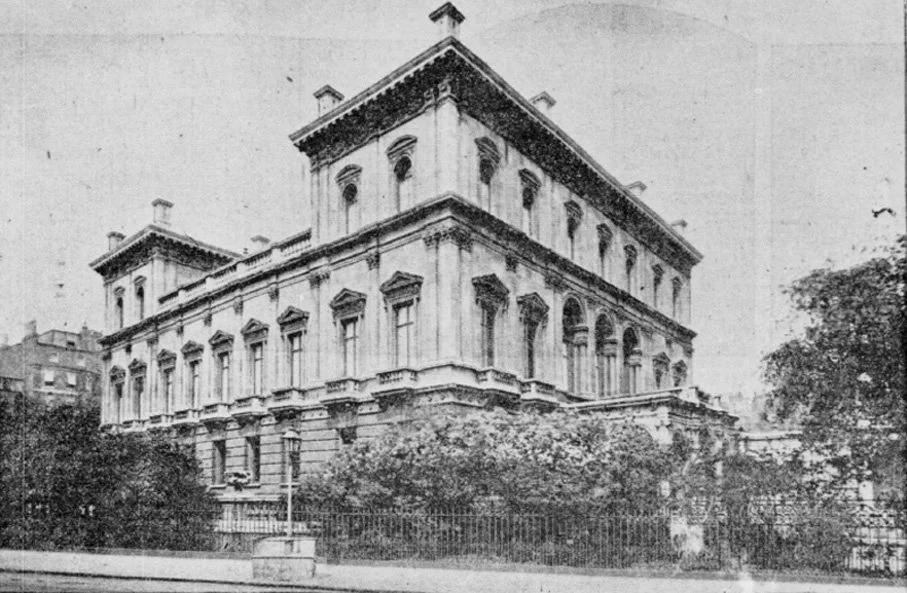
Dorchester House in 1905, before the mansion was replaced by The Dorchester hotel.
Credit: Dorchester House, New York Tribune, 29 May 1905 / Wikimedia Commons. Photographer unknown. Public domain.
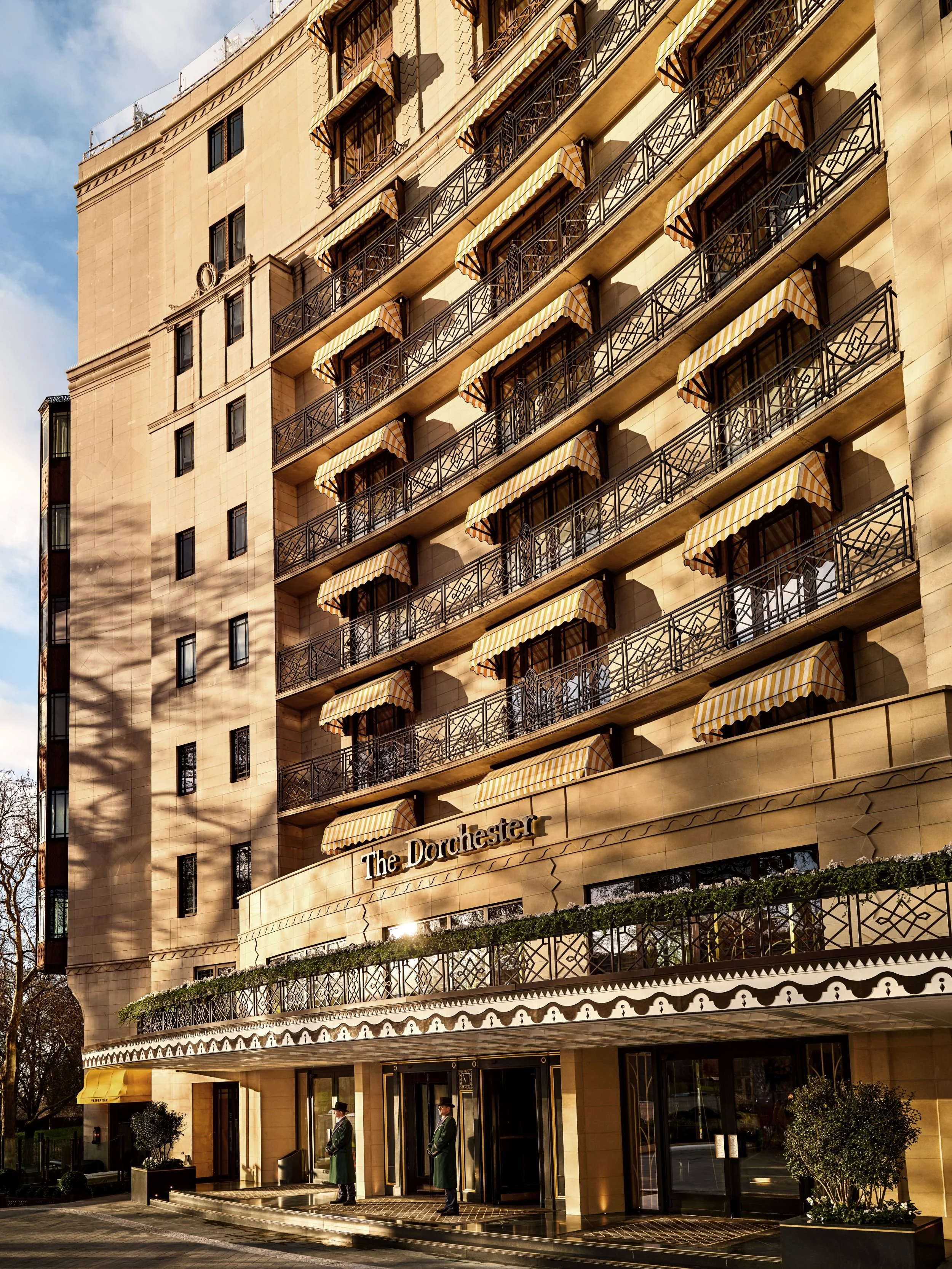
The Dorchester inherited its name from an older London address. Dorchester House had been a grand private residence, later serving diplomatic and wartime purposes, before it was demolished in 1929.
The hotel that followed was a new construction, opening in 1931 under the McAlpine family’s direction. Sir Robert McAlpine’s ambition was to create his idea of the perfect hotel, and the building programme was unusually swift: eighteen months, with floors rising at roughly one a week.
Behind the luxurious interiors was modern engineering, including reinforced-concrete construction. The hotel went on to host General Eisenhower during the Second World War as he planned the Normandy invasion. In 1953, stage designer Oliver Messel decorated its façade for Queen Elizabeth II’s coronation.
Those early chapters reveal the breadth of The Dorchester’s identity. The grand occasions associated with the address were supported by a hotel conceived with considerable technical ambition, then enriched by people whose work connected it to politics, theatre and royal ceremony.

-
Setting: Park Lane overlooking Hyde Park, with Mayfair’s galleries, boutiques and restaurants nearby.
Accommodation: 241 rooms and suites, including park-view rooms and terrace suites for VIP stays.
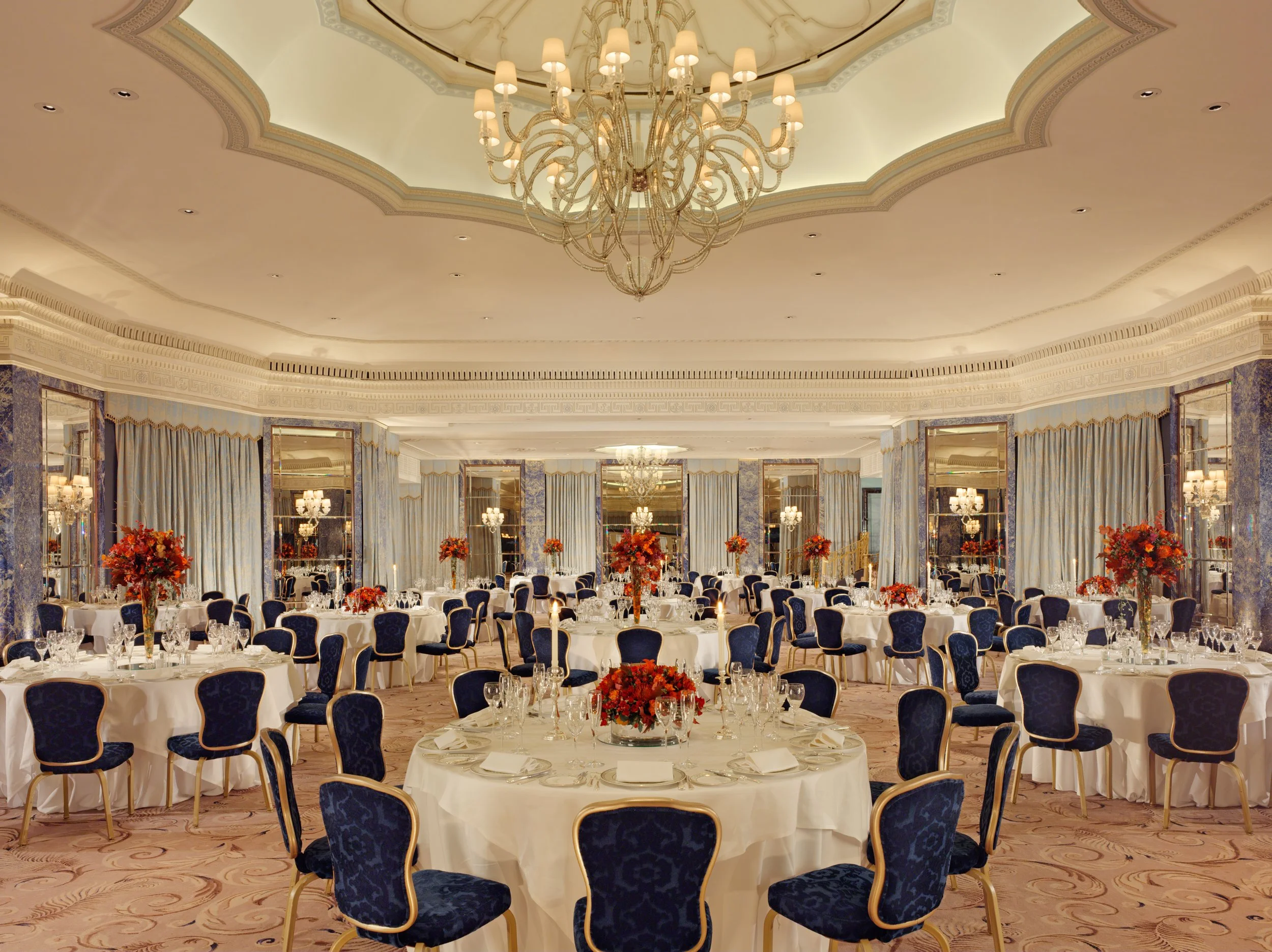
Meetings and events: The 555 sq m Ballroom has its own Park Lane entrance; the Holford Room accommodates up to 58 for dinner or 50 for cocktails.
Dining: Alain Ducasse, The Grill and The Promenade offer different dining styles, alongside smaller private settings such as the Wine Vault and Chef’s Table.
Wellness: The Dorchester Spa offers treatments and a fitness studio; its interiors draw on the hotel’s 1930s character.
Experiences: A dinner in the Holford Room places guests within the original 1931 design, with a name that reaches back to the earlier Dorchester House.
Incentive potential: Use archival photographs and a short historical introduction to give an intimate dinner a connection to the address’s earlier residents and grand occasions.
A private dinner in the Holford Room puts guests within one of the hotel’s few spaces to retain its original 1931 design. Named after Robert Holford, whose grand house preceded the hotel, the room connects two chapters of the address. An introduction to its namesake, supported by photographs of Dorchester House, could give the evening a personal link to that earlier life.
Four Seasons Hotel London at Park Lane
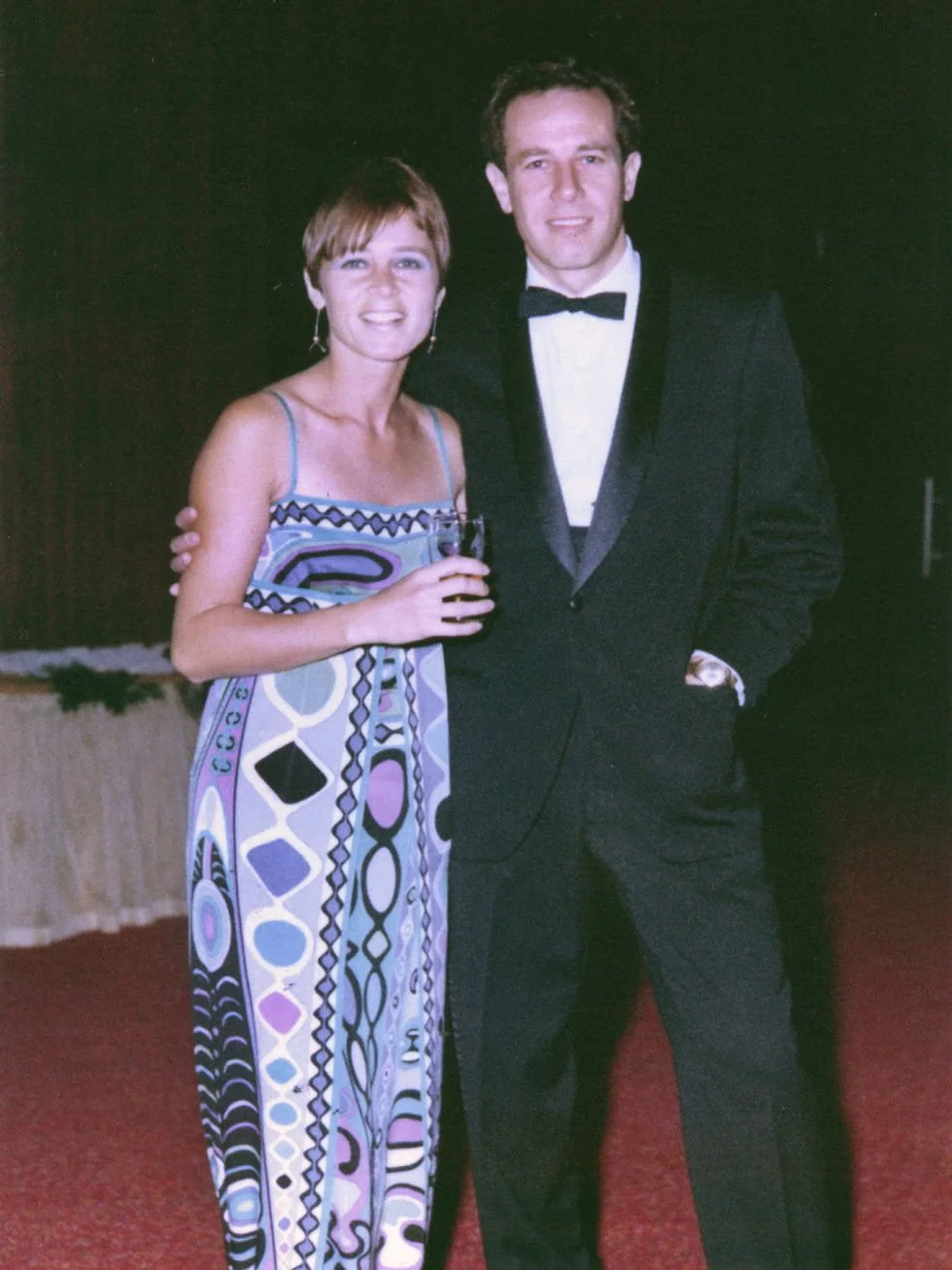
Rosalie & Isadore Sharp.
Credit: Four Seasons
Where an idea of service took shape
The plan for the site near Hyde Park was initially modest. After a chance meeting with British partners in the mid-1960s, Four Seasons founder, Isadore Sharp, found himself discussing a hotel in a city already well supplied with grand establishments.
Sharp had a different proposition: a smaller hotel where comfort and personal attention would do much of the work. In the company’s own history, he describes his ambition as “a personal, down-to-earth hotel”, offering the care associated with a grand address in a more approachable setting.
The Inn on the Park opened in 1970 as Four Seasons’ first European property. Its success helped Sharp establish the direction of the wider company, focusing on hotels of exceptional quality and making service a defining feature of the brand.
The London hotel therefore holds a particular place in luxury hospitality. The attention to the individual guest that people associate with Four Seasons was tested and developed here, before becoming an approach recognised across the world.
-
Setting: Hamilton Place in Mayfair, between Hyde Park and Green Park, close to Knightsbridge and Buckingham Palace.
Accommodation: 196 rooms and suites, supporting a residential programme with suite options for senior guests.
Meetings and events: 707 sq m of event space; the Ballroom accommodates up to 250 for a banquet or 500 for a reception, with several smaller meeting rooms.
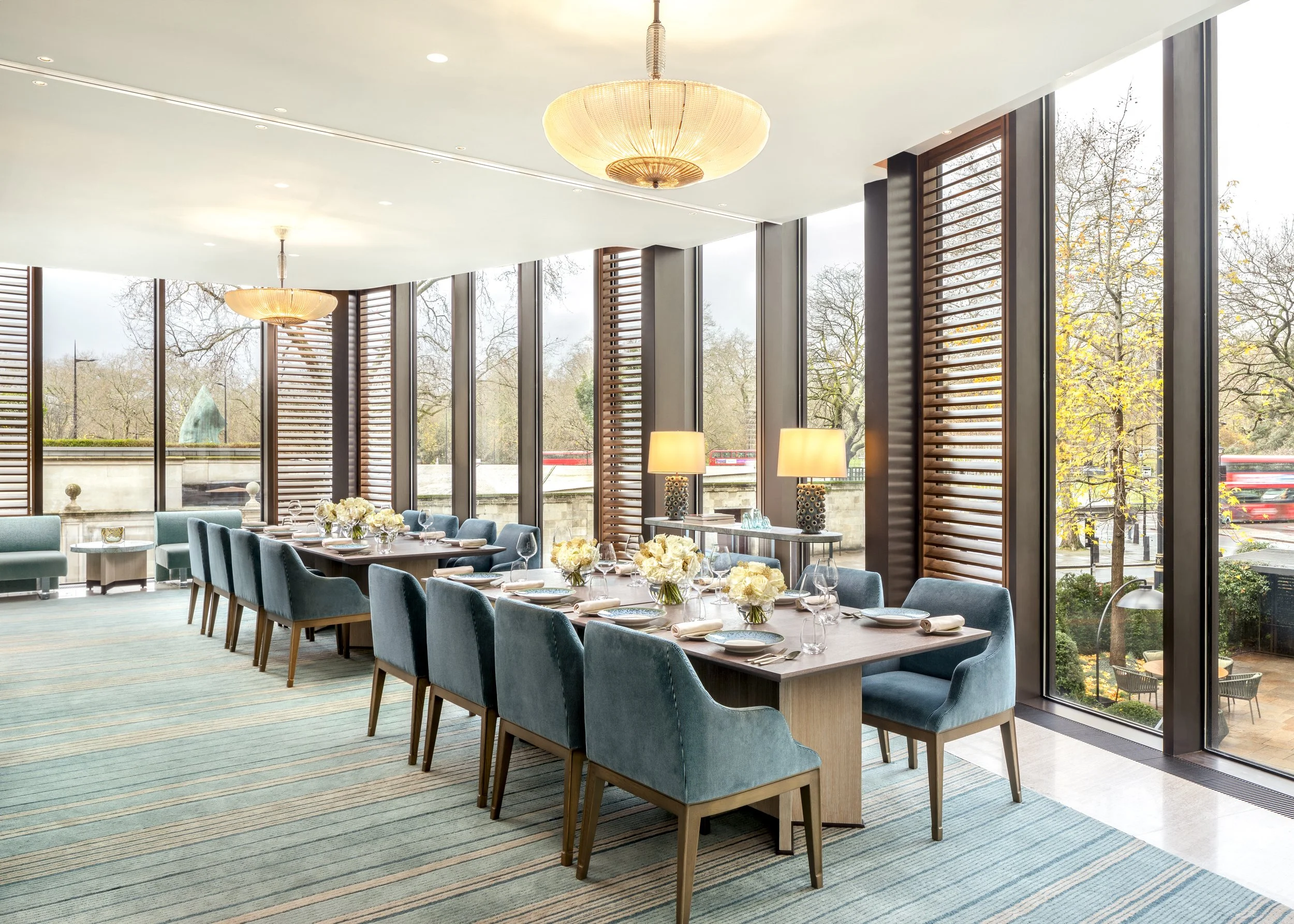
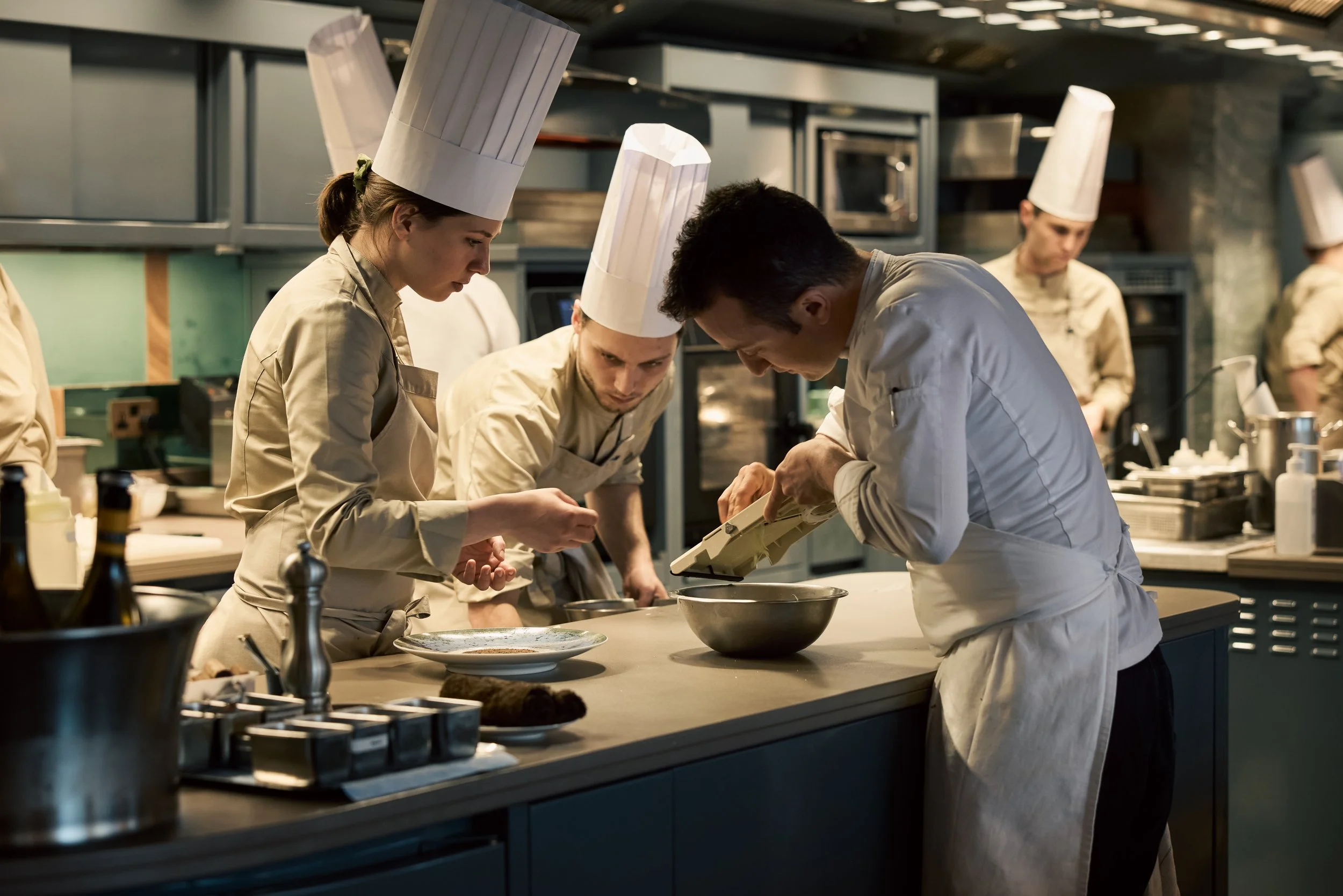
Dining: Pavyllon London by Yannick Alléno offers modern French cuisine; Pavyllon Privé seats 8–40 guests with menus tailored to the occasion.
Wellness: The rooftop spa includes nine treatment rooms, vitality pools, saunas and views across Hyde Park and the city.
Experiences: TEN at Four Seasons offers a tenth-floor setting for up to 20 at a private dinner or reception, bringing the skyline into a smaller gathering.
Incentive potential: A leadership programme exploring service can move from a meeting into a personalised private dinner, reflecting the approach Isadore Sharp developed here.
Sharp’s approach offers a theme for a leadership gathering exploring service and the decisions that shape a guest’s experience. That discussion could continue over a private dinner in Pavyllon Privé, where the hotel offers personalised dining and menus tailored to the group. The connection to its history would lie in how the occasion is hosted, with individual attention running through the programme.
COMO Metropolitan London
Park Lane meets the 1990s
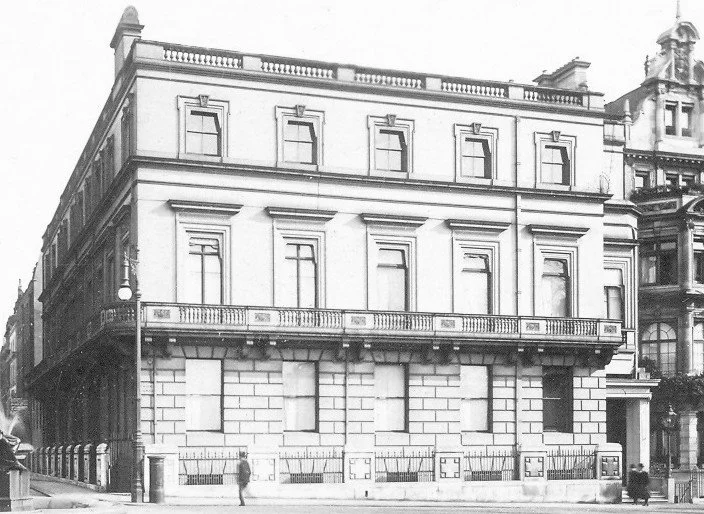
Londonderry House, c.1900, on the site later occupied by COMO Metropolitan London.
Credit: Londonderry House, postcard, c.1900 / Wikimedia Commons. Photographer unknown. Public domain.
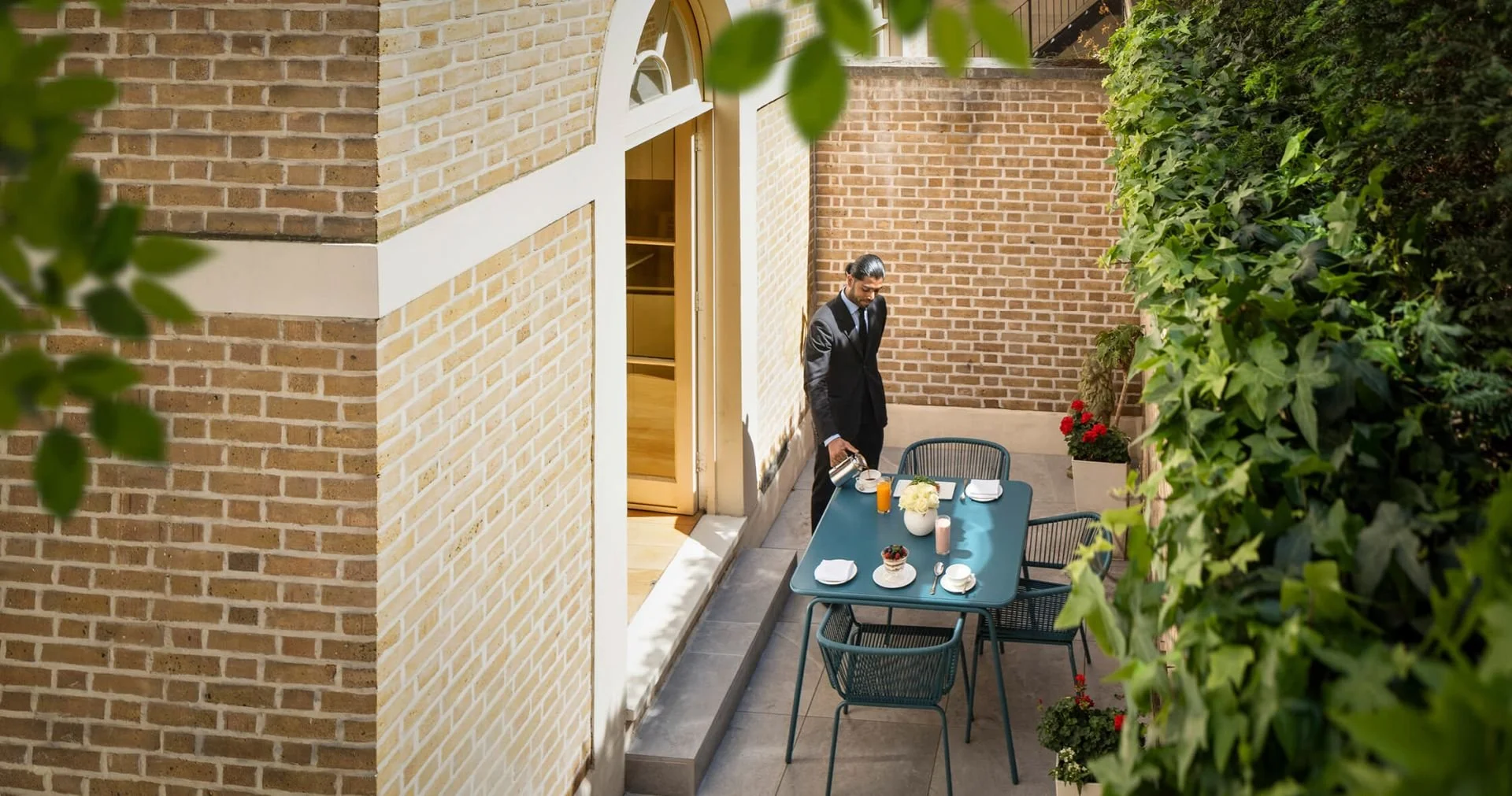
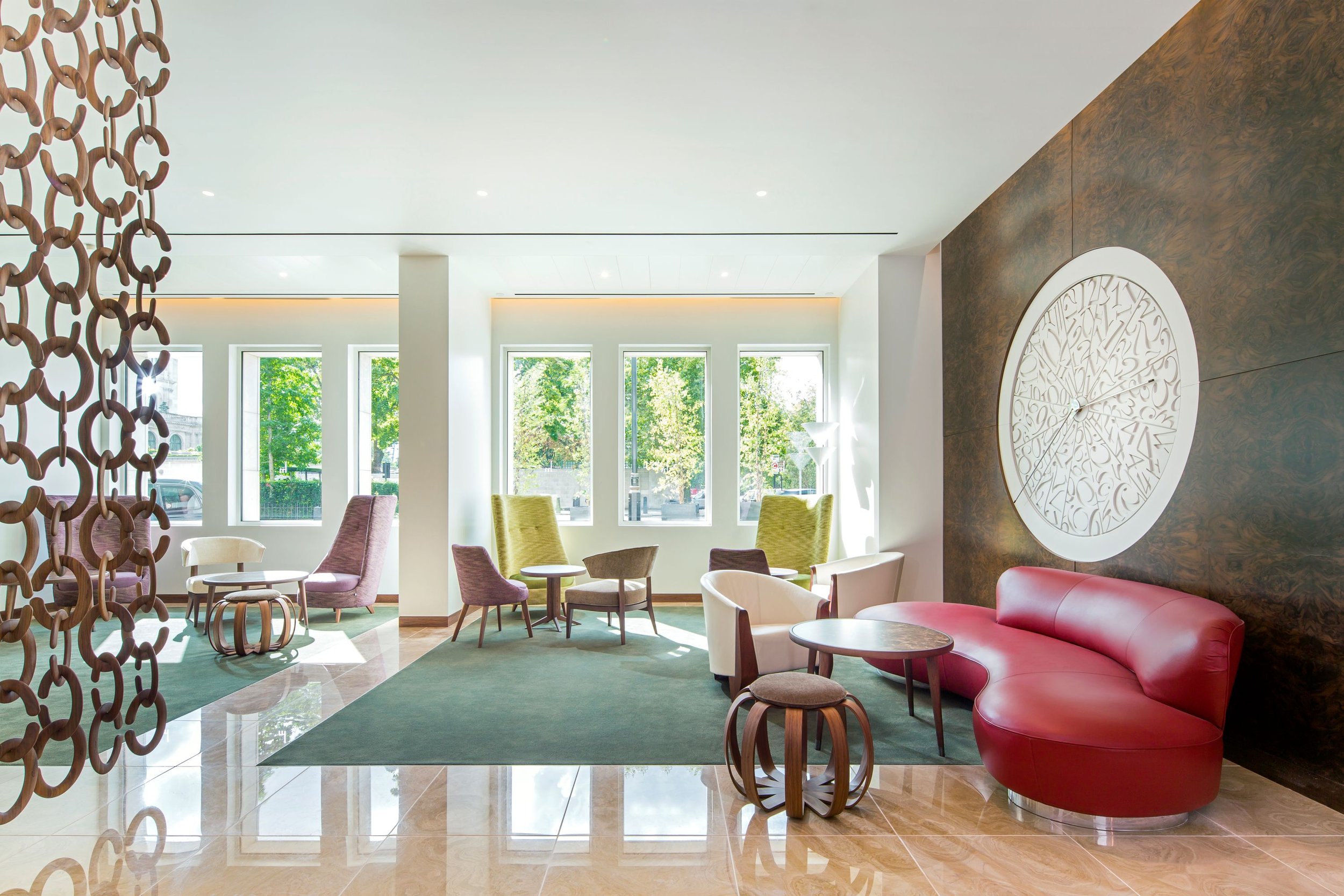
The Metropolitan arrived in February 1997 with a different aesthetic for Park Lane. The building had previously housed the Londonderry Hotel, built in 1967. Following acquisition by the Ongs’ Kuo International, it underwent a substantial refurbishment that changed its identity.
Designers Keith Hobbs and Linzi Coppick stripped back the familiar elements of a traditional English hotel, creating a contemporary setting that was intended to feel sophisticated and welcoming.
The Met Bar became a gathering place for figures including Kate Moss, Liam Gallagher and the Spice Girls, placing the hotel within the fashion and music circles of the Cool Britannia years.
-
Setting: Old Park Lane in Mayfair, opposite Hyde Park, with Shepherd Market, galleries and shopping streets nearby.
Accommodation: 144 rooms and suites, plus 19 private residences; Brick Street and Hertford Street offer apartment-style options for longer stays.
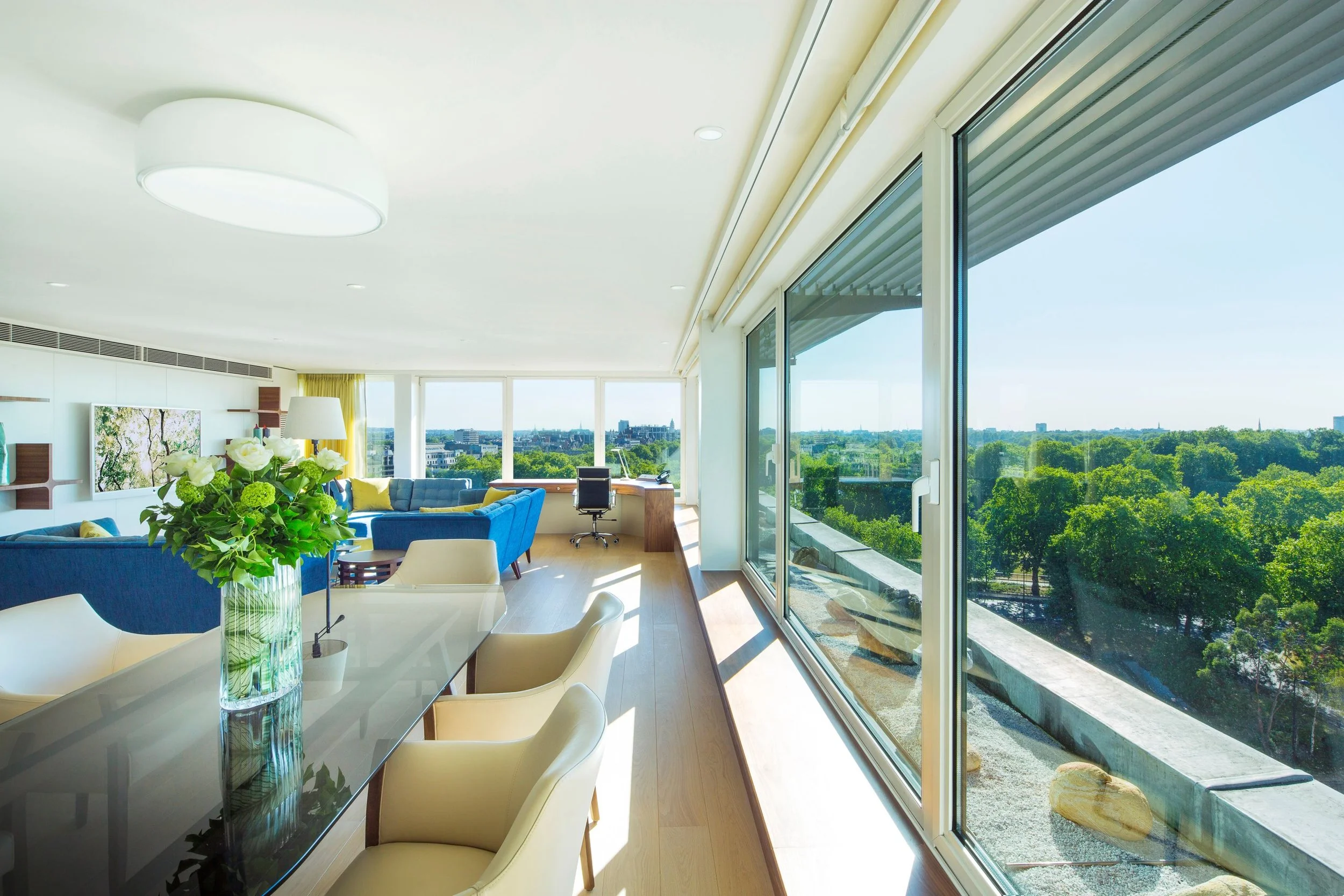
Meetings and events: The White Room’s glass pyramid ceiling provides natural light; the Met Boardroom seats 14, while Residence 23H hosts up to 15 with courtyard access.
Dining: Labombe by Trivet offers private dining for up to 10; pre-booked Nobu bento boxes can be served in private meeting rooms.
Wellness: COMO Shambhala offers corporate additions including guided breathwork, meditation, seated massage and stretching, booked in advance.
Experiences: The White Room can shift from a daytime meeting to a private dinner or cocktail party with a dedicated mixologist.
Incentive potential: Combine London design or gallery visits with an intimate residential-style gathering, then build in COMO Shambhala sessions between programme elements.
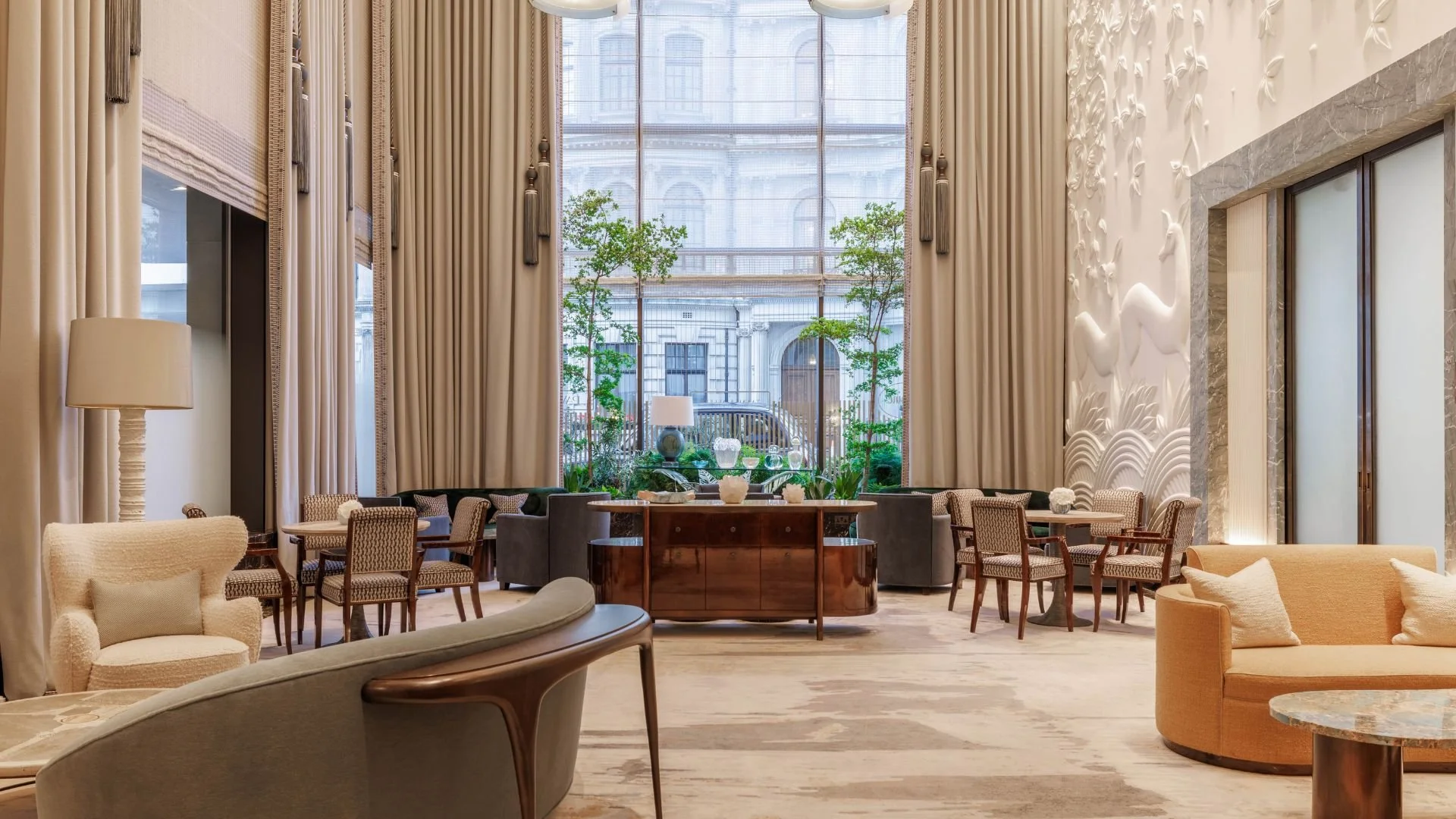
Today, COMO Metropolitan London’s light woods and pared-back interiors continue the original design approach. Knowing its earlier life gives that calm setting another dimension: this was an address that helped make contemporary style desirable on a street better known for established hotel names.
Its 1990s design story could introduce a programme exploring London’s creative industries. Gallery visits or a conversation with a London designer could lead into a meeting or brand launch in Residence 23H, which the hotel offers as a contemporary residential setting with access to a private courtyard. The connection would come through the design and intimacy of the experience.
1 Hotel Mayfair
A familiar building with new priorities

Barry Sternlicht, founder of 1 Hotels, photographed in 2016.
Credit: Christopher Michel / Wikimedia Commons / CC BY-SA 4.0. Cropped from the original photograph.
1 Hotel Mayfair opened in July 2023 as the first European property of Barry Sternlicht’s nature-inspired hotel brand. Its most significant early decision concerned the buildings it would occupy: an existing hotel building on Berkeley Street and a neighbouring commercial property.
The project retained more than eighty per cent of the existing structures. Reworking what was already there reduced the demolition and construction involved, making the building’s previous life part of the new hotel’s environmental approach.
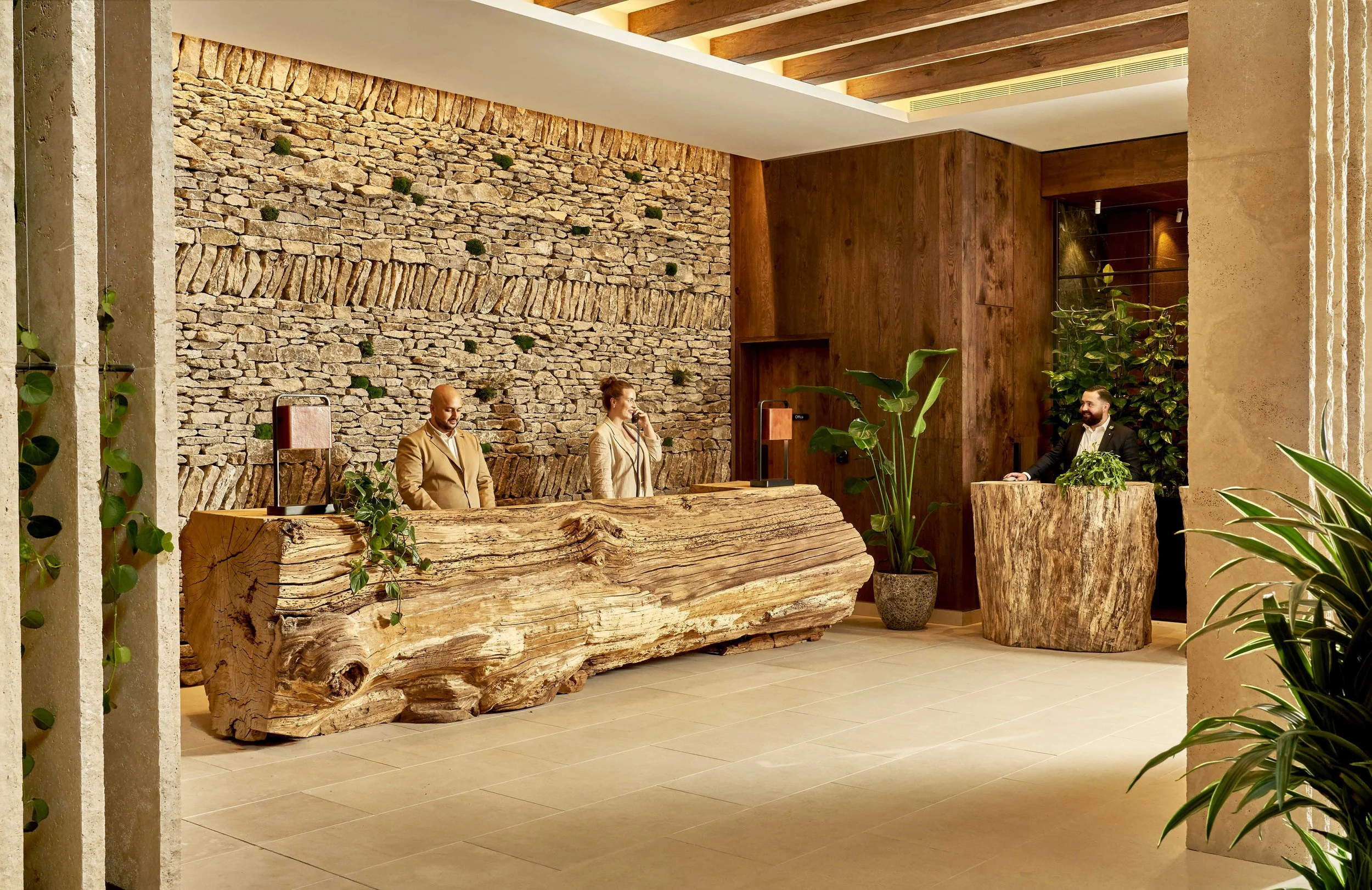
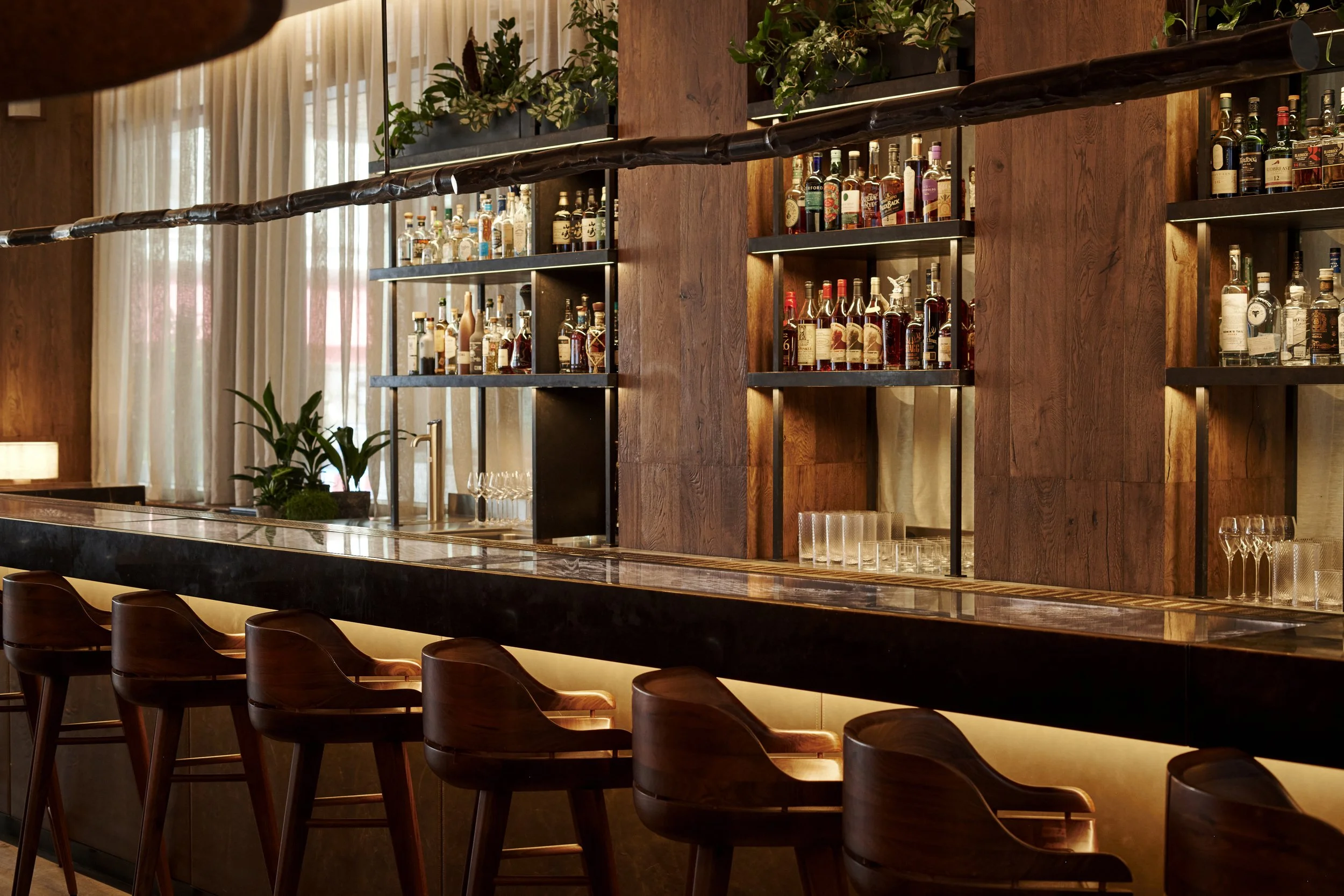
Inside, that interest in materials is something guests can see and touch. The reception desk was fashioned from a weathered oak tree from West Sussex; reclaimed stone and timber sit alongside living greenery. Green Park supplies a nearby reference for the landscape brought into the hotel.
Its previous life is part of the story guests can discover today. Alongside the restored rooms and relocated fireplaces of London’s older hotels, 1 Hotel Mayfair adds a recent example of how much character can come from working with what is already there.
-
Setting: Berkeley Street overlooking Green Park, with Mayfair’s galleries and the Royal Academy of Arts nearby.
Accommodation: 181 rooms, including 44 suites; terrace and penthouse categories create additional options for VIP hosting.
Meetings and events: Meadow accommodates up to 100 theatre-style or 150 for a reception and divides into four rooms; Nightingale offers an indoor-outdoor courtyard setting.
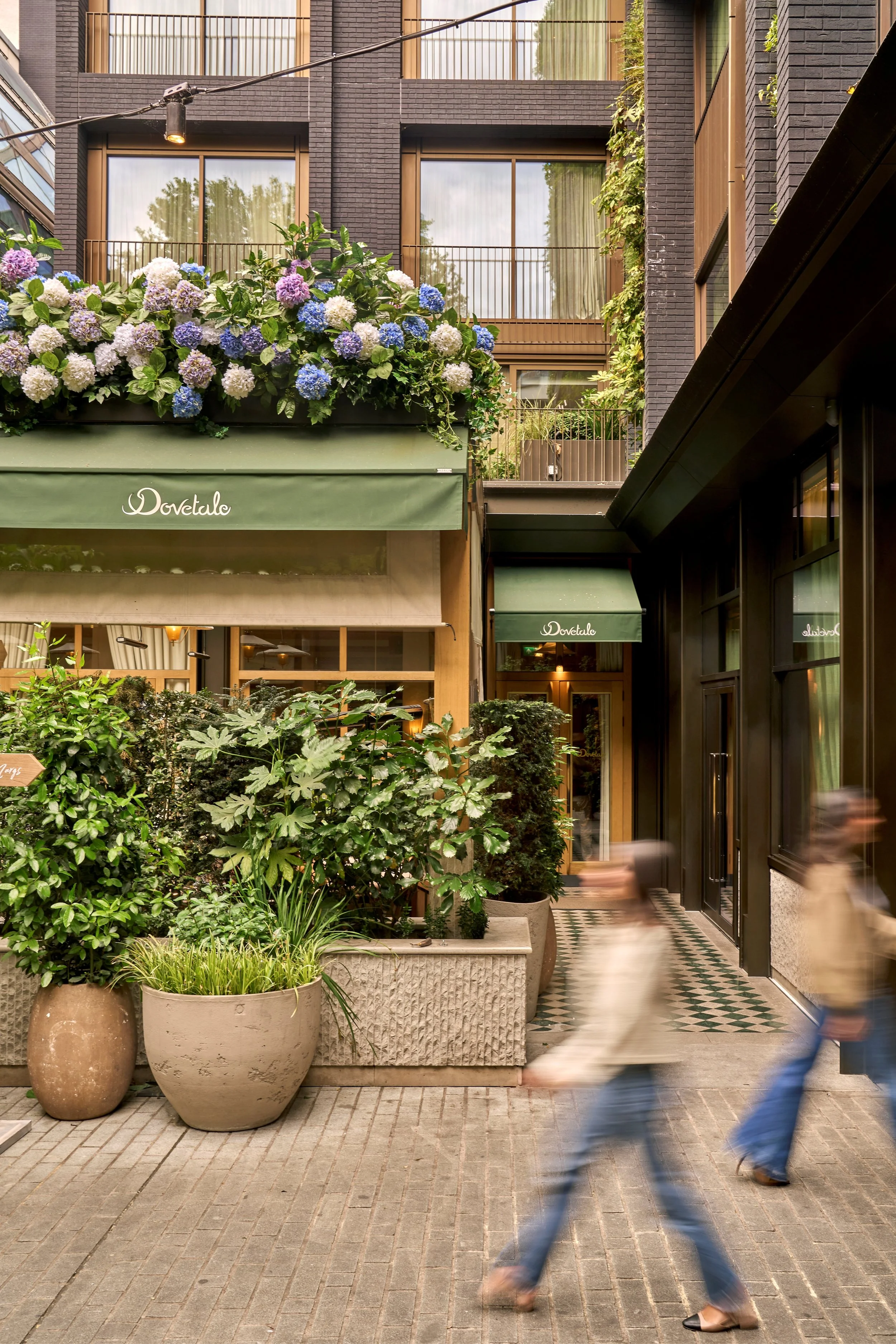
Dining: Dovetale, Dover Yard and private event menus focus on seasonal ingredients; Nightingale is available for private dinners and celebrations.
Wellness: Bamford Wellness Spa and The Field House support a wellbeing itinerary; the events offering includes private group yoga.
Experiences: Reclaimed materials and retained structures give guests tangible details to explore in an introduction to the hotel’s design.
Incentive potential: Connect a nature walk through Green Park with group yoga and a seasonal private dinner, using the building’s reuse story to inform the programme.
The emphasis on thoughtful reuse can carry into an incentive built around nature and wellbeing. A private dinner in Nightingale, the courtyard’s intimate indoor-outdoor space, could be combined with seasonal menus and a private group yoga session, all described within the hotel’s events offering. An introduction to the reclaimed materials around guests would connect those experiences to the decisions behind the building.
The connection can continue beyond the hotel: a theatre evening from The Savoy, a walk through the Royal Parks from InterContinental, or a closer look at London’s design scene from COMO. Used this way, a hotel’s history can help give the wider programme a clear thread.
Knowing how a hotel came to be can change the way guests encounter it. A restored room, a design decision or a founder’s approach to service gives a London stay another story to carry home. These ten properties will welcome directors and teams from event agencies and corporate event teams attending MASTERS by inVOYAGE this November, each bringing its own history to the experience.